Best Low-Calorie Foods UK: Filling Options for Meal Prep and Fat Loss
This is the main UK guide to low calorie foods for realistic weight loss weeks: high-protein staples, high-volume vegetables, fruit, ready-to-eat options and supermarket swaps from Tesco, Aldi, Asda, Sainsbury's, Lidl and Morrisons. Use it to build a better basket, then jump into a printable 1500 calorie or 1800 calorie meal plan with a shopping list.
If you want these foods turned into a Tesco basket, use the Tesco low calorie meal plan. For ready-made calorie targets, compare the printable 1500 calorie meal plan, 1,800 calorie plan and 2,000 calorie plan.
For a printable low-calorie week, start with the 1500 calorie meal plan hub, compare weight loss meal plans, or open the low calorie shopping list for plan pages with grouped baskets.
For a complete week built around these foods, see the 1500 calorie meal plan, the Aldi low calorie meal plan, or the vegetarian low calorie meal plan. For a fully plant-based approach, the vegan low calorie meal plan covers the same calorie target without any animal products.
Quick Answer: Best Low Calorie Foods in UK Supermarkets
The most useful low calorie foods are the ones that keep meals filling: lean protein, high-fibre carbohydrates, vegetables, fruit, soups, low-fat dairy and simple ready-to-eat options. A good 1500 calorie day usually needs proper meals, not just tiny snack portions.
For weight loss, start with foods you can buy repeatedly and cook without fuss. The table below covers the fastest wins for UK shoppers.
| Food type | Best UK examples | Why it helps |
|---|---|---|
| Lean protein | Chicken breast, tuna, prawns, turkey, eggs, tofu, cottage cheese, skyr | Higher protein for fewer calories and better meal satisfaction |
| High-volume veg | Broccoli, cauliflower, spinach, courgette, mushrooms, salad bags, frozen mixed veg | Big portions for low calories, useful for lunch and dinner volume |
| Filling carbs | Oats, potatoes, rice, wholemeal wraps, lentils, beans | Keeps meals realistic and easier to repeat than salad-only plans |
| Ready-to-eat helpers | Soup, pre-cooked chicken, boiled eggs, protein yogurt, salad bowls | Useful when time is the main reason plans fail |
| Snacks | Fruit, skyr, cottage cheese, boiled eggs, popcorn, veg sticks | Helps bridge meals without turning snacks into a second dinner |
Best Low Calorie Foods by UK Shopping Job
Searchers usually need one of three things: a quick basket idea, a full printable plan, or a swap for a meal they already buy. Choose the food list by job first, then move into a plan page when you need quantities and a shopping list.
| Need | Use these foods | Best next page |
|---|---|---|
| Simple 1500 calorie week | Greek yogurt, oats, eggs, chicken, tuna, potatoes, frozen veg, fruit | 1500 calorie meal plan hub |
| Cheap low calorie basket | Eggs, lentils, beans, frozen chicken, soup, rice, salad bags | Low calorie shopping list |
| High protein low calorie | Chicken breast, prawns, tuna, skyr, cottage cheese, tofu, turkey mince | High protein meal plans |
| No-cook backup | Soup, salad bowls, cooked chicken, boiled eggs, skyr, fruit, tuna pouches | Low calorie ready meals guide |
Low Calorie Ready-Meal Alternatives
Ready meals can help on busy weeks, but the best alternative is usually a repeatable plate you can assemble from supermarket basics. These swaps keep the convenience while giving you more control over protein, fibre and portion size.
If you want a full ready-meal comparison, use the dedicated low calorie ready meals UK guide, then link the best options into a weekly plan.
| If you usually buy | Lower calorie supermarket swap | Best next step |
|---|---|---|
| Creamy pasta ready meal | Tomato pasta with chicken, tuna or lentils plus a salad bag | Printable 1500 calorie meal plan |
| Pizza or garlic bread night | Wrap pizza with extra veg and a yogurt-based side | Low calorie dinner ideas |
| Takeaway-style curry | Lean chicken or tofu curry with microwave rice and frozen veg | Tesco or generic supermarket plan |
| Meal deal sandwich, crisps and drink | Protein wrap, fruit and skyr or soup | High protein low calorie plan |
Why Food Choice Matters on a Calorie Deficit
Two people can both eat 1,500 calories per day and have completely different experiences — one constantly hungry and low in energy, the other satisfied and performing well. The difference almost always comes down to food choices. A diet of processed, low-nutrient foods provides the same number of calories as one built around whole foods, but leaves you far hungrier and more likely to give up.
The low-calorie foods that tend to work best share three characteristics: they are high in protein or fibre (or both), they have a high volume relative to their calorie count, and they are genuinely satisfying to eat. The foods below tick all of those boxes and are all widely available and affordable in UK supermarkets.
Best Low-Calorie Protein Foods
Protein is the macronutrient that does the most work during weight loss. It keeps you fuller for longer, has the highest thermic effect (meaning you burn more calories digesting it), and preserves muscle mass during a calorie deficit. The following are the best high-protein, low-calorie options in UK supermarkets:
- Chicken breast (skinless): ~165 kcal and 31 g protein per 100 g cooked (roughly 110–120 kcal and 22–24 g raw). The ultimate lean protein. Available from all major UK supermarkets, usually £5–8 per kg.
- Tinned tuna in spring water: ~100 kcal and 24 g protein per 100 g. Remarkably cheap — Tesco and Aldi sell tins for around 60–70p each.
- Eggs (large, free range): ~78 kcal and 6.3 g protein per egg. Cheap, versatile, and satisfying. Boiled, scrambled, or poached.
- 0% fat Greek yogurt: ~57 kcal and 10 g protein per 100 g. One of the best snacks available. Tesco, Aldi, and Lidl all sell large tubs for around £1.50–2.
- Low-fat cottage cheese: ~80 kcal and 12 g protein per 100 g. Often overlooked but excellent for hitting protein targets.
- Prawns (cooked, peeled): ~90 kcal and 20 g protein per 100 g. Low in fat, high in protein, delicious in salads and stir-fries.
- Turkey breast (lean, cooked): ~150 kcal and 30 g protein per 100 g. A useful swap for chicken, just as lean.
Best Low-Calorie Vegetables
Non-starchy vegetables are the backbone of any low-calorie diet. Most contain 20–50 kcal per 100 g, can be eaten in large quantities for almost no calorie cost, and provide essential vitamins, minerals, and fibre. Load your plate with these:
- Spinach: 23 kcal per 100 g. Rich in iron and folate. Perfect for omelettes, smoothies, and curry bases.
- Broccoli: 34 kcal per 100 g. High in fibre and vitamin C. Available fresh or frozen at all UK supermarkets.
- Courgette: 17 kcal per 100 g. Extremely versatile — spiralise as pasta, grill, roast, or add to soups.
- Cucumber: 15 kcal per 100 g. Excellent for snacking and salads.
- Cherry tomatoes: 18 kcal per 100 g. Sweet, portable, and great for adding volume to salads.
- Cauliflower: 25 kcal per 100 g. A brilliant low-carb substitute for rice (blitz in a food processor and microwave for 4 minutes).
- Cabbage (white or green): 25 kcal per 100 g. One of the cheapest vegetables available and surprisingly filling.
Best Low-Calorie Fruit
Fruit is nutritious but can be calorie-dense in large quantities due to its natural sugar content. These choices give the best balance of sweetness, fibre, and low calorie count:
- Strawberries: 32 kcal per 100 g. In season from May to September in the UK; frozen are available year-round.
- Blueberries: 57 kcal per 100 g. High in antioxidants; Tesco and Aldi both sell 150 g punnets for around £1–1.50.
- Raspberries: 52 kcal per 100 g. High in fibre; excellent frozen for smoothies and yogurt toppings.
- Watermelon: 30 kcal per 100 g. Very high water content; extremely filling for minimal calories.
- Grapefruit: 42 kcal per 100 g. High water content for very few calories, which makes it a filling breakfast addition.
Best Low-Calorie Carbohydrates
Carbohydrates are not the enemy — choosing the right ones makes a significant difference to your hunger levels and energy. Opt for high-fibre, whole-grain versions that digest slowly and keep blood sugar stable:
- Rolled oats: ~370 kcal per 100 g (dry), but a 50 g portion is only 185 kcal and very filling. Available from Aldi and Tesco for under £1 per kg.
- Brown rice: ~350 kcal per 100 g (dry). Slower to digest than white rice, keeping you fuller for longer.
- Wholemeal bread: ~220 kcal per 100 g (roughly 100 kcal per slice). Choose own-brand wholemeal over white for extra fibre.
- Sweet potato: ~90 kcal per 100 g (cooked). Lower glycaemic index than white potato; rich in vitamin A.
- Lentils (cooked): ~116 kcal per 100 g. Excellent combination of protein and complex carbs; brilliant for soups and stews.
Smart Shopping Tips for UK Supermarkets
Building a low-calorie diet on a budget is entirely achievable in the UK. These tips help you get the best value from your weekly shop at Tesco, Aldi, Sainsbury's, or Asda:
Buy frozen. Frozen vegetables and fruit are nutritionally equivalent to fresh and significantly cheaper. Frozen broccoli, peas, mixed veg, spinach (frozen in blocks), and berries are all excellent choices.
Shop own-brand. Tesco, Aldi, Sainsbury's, and Asda all have own-brand versions of key staples — oats, chicken, eggs, yogurt, tinned fish — that are just as nutritious as premium brands at a fraction of the price.
Best Low-Calorie Ready Meals in UK Supermarkets
Ready meals can fit into a low-calorie week if you choose well. The most useful options combine low calories with high protein — this keeps meals filling rather than just clocking a low number. See the best low-calorie ready meals UK guide for a full breakdown with protein comparisons.
| Ready meal type | What to look for | Watch out for |
|---|---|---|
| Canned or chilled soup | Under 200 kcal, ideally 10 g+ protein. Tesco, Aldi and M&S all have decent options. | High sodium levels — not ideal as a daily staple |
| Chilled protein bowls | Higher-protein ranges such as Sainsbury's High Protein meals, built to at least 31 g protein for under 500 kcal. | Check serving size — some list half the pack as one serving |
| Lean chilled ready meals | Tesco Calorie Controlled, Sainsbury's Be Good To Yourself and Asda's Better For You ranges flag calorie counts clearly. | Many are low in calories but also low in protein — not ideal as a main meal |
| Microwave rice pouches | ~220 kcal per 250 g pouch — useful as a base rather than a meal in itself. | Choose wholegrain versions for more fibre and slower energy release |
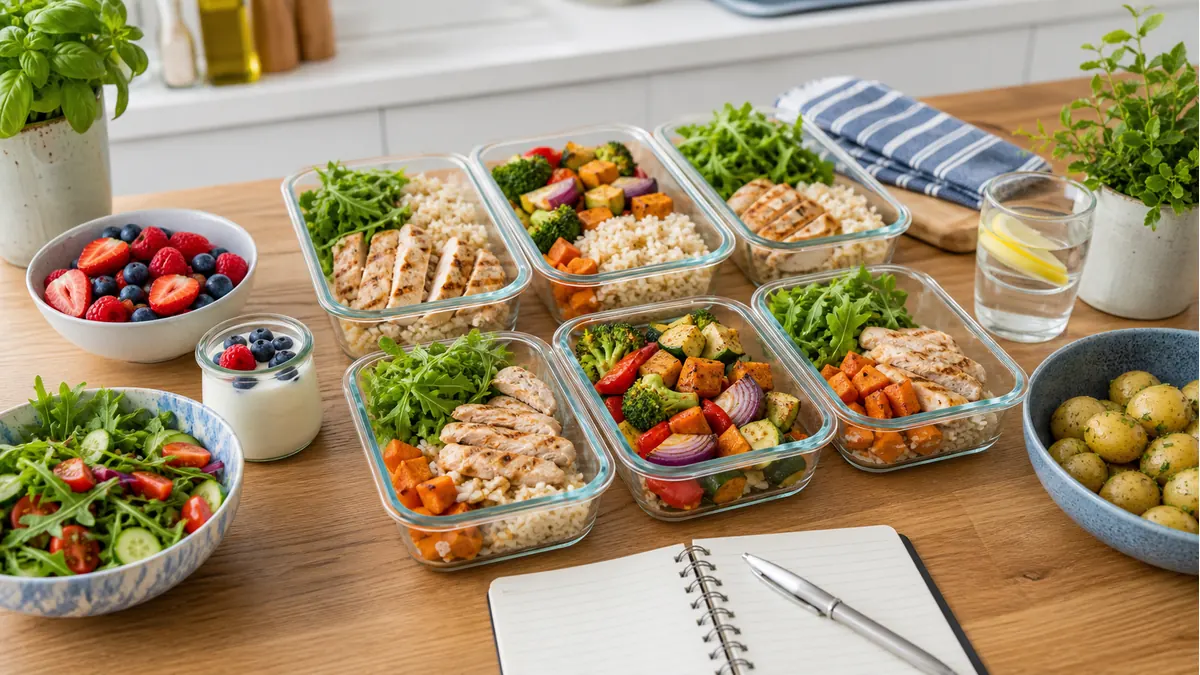
Example Low-Calorie Meal Prep Shopping Basket
The items below make up an illustrative one-person low-calorie week from a budget UK supermarket. Prices vary by supermarket and change regularly — use this as a guide to what to look for rather than a fixed cost.
| Category | Example items | Why they work |
|---|---|---|
| Lean protein | Chicken breast, tinned tuna, eggs, 0% Greek yogurt | High protein on low calories keeps meals filling and supports muscle retention |
| Vegetables | Frozen broccoli, spinach, mixed veg, cherry tomatoes | Large volume, very low calories — eat plenty without tracking tightly |
| Filling carbs | Rolled oats, brown rice, sweet potatoes, wholemeal bread | Slow-digesting, reduces hunger between meals |
| Low-calorie snacks | Cottage cheese, low-fat yogurt, carrot sticks, apples | Under 200 kcal each — keeps appetite in check without derailing the day |
Common Mistakes on Low-Calorie Diets
These are the most common reasons a low-calorie approach stalls or becomes unsustainable:
- Cutting calories too aggressively. NHS weight-loss guidance uses average daily targets of about 1,400 kcal for women and 1,900 kcal for men after a 600-calorie reduction, but your right target depends on body size, activity and health status. A 1,500–1,800 kcal target is more sustainable for many people than very low-calorie dieting.
- Eating low-calorie foods that are also low in protein. A chicken salad and a bag of rice cakes may have similar calorie counts, but only one keeps you full. Prioritise protein at every meal.
- Not accounting for drinks. Lattes, juice, smoothies, and energy drinks can add 200–400 kcal with little satiety benefit. Water, black coffee, and tea have negligible calories.
- Relying on willpower rather than planning. Batch-cooking on Sunday and keeping low-calorie snacks visible in the fridge is far more reliable than making good choices when already hungry.
- Treating low-calorie foods as unlimited. While vegetables are very low in calories, sauces, oils, dressings, and toppings can add up quickly — weigh or measure dressings until you have a feel for portions.
Frequently Asked Questions
Which low calorie foods are most filling?
The most filling low-calorie foods are those high in protein or fibre: 0% Greek yogurt, chicken breast, eggs, cottage cheese, and non-starchy vegetables like broccoli and spinach. Protein is more satiating per calorie than carbohydrates or fat.
What is the best low calorie food for weight loss in the UK?
Chicken breast, tinned tuna, 0% Greek yogurt, and eggs consistently rank highest for weight loss because they are high in protein, low in calories, very filling, and affordable in UK supermarkets.
Are frozen vegetables as nutritious as fresh?
Yes. Frozen vegetables are typically frozen within hours of harvest and retain almost all their nutritional value. They are nutritionally equivalent to fresh vegetables and often cheaper — frozen broccoli at Aldi or Tesco costs around £1 per kg.
What low-calorie ready meals can I buy in UK supermarkets?
Tesco Calorie Controlled, Sainsbury's Be Good To Yourself and Asda's Better For You ranges all offer lower-calorie ready meals. Look for options with at least 20–25 g of protein as well as low calories — these are far more filling than low-calorie meals that are also low in protein.
How much protein should I eat on a 1500 calorie diet?
Aim for at least 100–120 g of protein per day on a 1,500 calorie plan. This is roughly 27–32% of calories from protein, which helps preserve muscle, keeps you full, and supports the thermic effect of food. Eggs, chicken, tuna, and 0% Greek yogurt are the most efficient sources.
Can vegetarians eat low-calorie and high-protein in the UK?
Yes. Eggs, 0% Greek yogurt, cottage cheese, tofu, and lentils are all low in calories relative to their protein content and widely available in UK supermarkets. A vegetarian can hit 100 g+ protein per day on 1,500 calories with these foods at the base of each meal.
Want this as a full 7-day plan?
We'll email the matching plan, its shopping list and a printable copy.
We'll send: Weight Loss Meal Plan — 1,500 kcal
Want a new plan every week? Join the MealPrep+ waitlist.
Find Your UK Supermarket Meal Plan
Answer seven quick questions to find a realistic weekly plan for your supermarket, calorie target, budget and dietary preferences.
Find My Meal Plan →