How to Lose Weight Fast in the UK — Safe, Evidence-Based Methods
Everyone wants to lose weight quickly — but most fast weight loss methods lead to muscle loss, nutrient deficiencies, and rapid rebound weight gain. This guide covers how to lose weight as fast as is safely possible using evidence-based methods: aggressive but sustainable calorie deficits, high-protein eating, and strategic food choices available at UK supermarkets. You will also see realistic timelines for different starting weights and calorie targets.
How Fast Can You Safely Lose Weight?
NHS weight-loss guidance suggests aiming to lose around 0.5–1 kg per week. In practice, many people do better starting with a moderate deficit and adjusting from their actual weight trend rather than jumping straight to the most aggressive end of that range.
Faster weight loss is possible but comes at a cost. Losing more than 1 kg per week usually needs a very large deficit, which raises the risk of losing muscle alongside fat. For many people it also means very low intakes (below about 1,200 kcal/day), which make nutrient gaps, fatigue and strong hunger more likely — the main reasons crash diets tend to be abandoned.
The most effective "fast" weight loss is therefore the fastest rate you can sustain without feeling drained: often a moderate calorie deficit, enough protein to support muscle retention, and meals that manage hunger.
- 0.5 kg/week: 500 calorie daily deficit — safe, sustainable, achievable for almost anyone.
- 0.75 kg/week: often requires a larger daily deficit and is more demanding to sustain.
- 1 kg/week: the upper end of the NHS weekly-loss range; challenging to sustain long-term and not automatically appropriate for every body size.
- Over 1 kg/week: Involves muscle loss; not recommended without medical supervision.
The Fastest Safe Method: a High-Protein Calorie Deficit
The single most effective strategy for fast weight loss is combining a meaningful calorie deficit with high protein intake (at least 1.6–2 g of protein per kg of body weight per day). High protein intake does three critical things: it preserves muscle mass during the deficit, which keeps your metabolism higher; it significantly reduces hunger and increases satiety, making the deficit easier to maintain; and it has a higher thermic effect than fat or carbohydrate, meaning you burn slightly more calories digesting it.
For a 75 kg person, aim for at least 120–150 g of protein per day. At 1,500–1,600 calories total, this means protein makes up about 30–40% of total calories — higher than typical dietary guidelines but well-supported by the research on body composition and fat loss speed.
UK supermarket foods that make this easy: chicken breast (31 g protein per 100 g cooked, ~165 kcal), tinned tuna (25 g per 100 g, ~100 kcal), 0% Greek yogurt (10 g per 100 g, ~57 kcal), cottage cheese (12 g per 100 g, ~80 kcal), and eggs (6 g per egg, ~70 kcal).
What to Eat for Fast Weight Loss in the UK
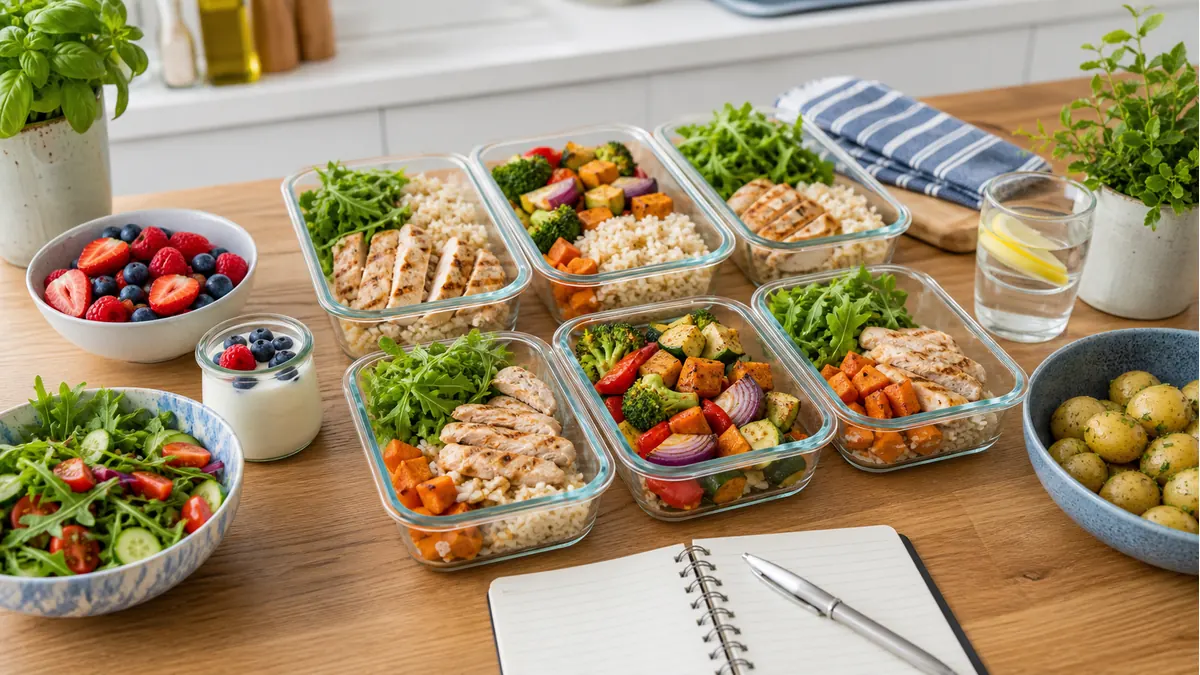
A fast weight loss diet in the UK should be built around lean proteins, high-fibre carbohydrates, and non-starchy vegetables. These foods are calorie-sparse but filling, allowing you to eat a large volume of food within a 1,400–1,600 calorie target.
Lean proteins keep you full and preserve muscle. Non-starchy vegetables (broccoli, spinach, courgette, cucumber, peppers) provide fibre, vitamins, and bulk for almost no calories — 300 g of broccoli is only about 100 kcal. High-fibre carbohydrates like oats, wholemeal bread, and brown rice digest slowly and prevent the energy crashes that lead to overeating.
- Breakfast: Overnight oats with 0% Greek yogurt, mixed berries, and a tablespoon of peanut butter — ~350 kcal, 25 g protein.
- Lunch: Chicken breast, brown rice, and a large portion of mixed salad leaves with balsamic vinegar — ~400 kcal, 40 g protein.
- Dinner: Stir-fried turkey mince with mixed vegetables and noodles in a low-sodium soy sauce — ~450 kcal, 35 g protein.
- Snack: 200 g 0% Greek yogurt with a sprinkle of mixed seeds — ~170 kcal, 22 g protein.
Foods to Avoid for Fast Weight Loss
The biggest obstacles to fast weight loss are calorie-dense, low-satiety foods. These are foods that pack a high number of calories into a small volume without filling you up — making it easy to eat far more calories than intended.
Liquid calories are the most dangerous: a large glass of fruit juice (150 kcal), a glass of wine (160 kcal), or a flavoured coffee (250–400 kcal) contribute significant calories without triggering meaningful fullness. Eliminating liquid calories is often the single most impactful dietary change for people who want to lose weight quickly.
- Fruit juice and smoothies — high sugar, low satiety, often as calorie-dense as fizzy drinks.
- Alcohol — 7 kcal per gram, no nutritional value, increases appetite and lowers inhibitions around food choices.
- Ultra-processed snacks (crisps, biscuits, cereal bars) — engineered to override satiety signals.
- Large portions of oils and butter — even "healthy" fats like olive oil are 120 kcal per tablespoon.
- White bread, white pasta, and white rice in large quantities — spike blood sugar and return hunger quickly.
Exercise: How Much Does It Help?
Exercise is important for health and helps accelerate weight loss — but its direct calorie-burning impact is often overestimated. A 30-minute moderate run burns roughly 250–350 calories for a 75 kg person, about the same as two slices of toast with peanut butter. This does not mean exercise is pointless — it significantly boosts TDEE over the week, improves insulin sensitivity, and helps preserve muscle during a deficit.
The most time-efficient exercise combination for fast weight loss is 2–3 sessions of resistance training (weights, bodyweight) per week plus daily walking of 7,000–10,000 steps. Resistance training preserves muscle mass and keeps your metabolic rate higher. Daily walking is low-intensity enough to do even in a calorie deficit without excessive hunger, and adds 200–400 extra calories burned per day.
Realistic Weight Loss Timelines
How much weight you can lose in a given period depends on your starting weight, calorie deficit, and protein intake. The heavier you start, the faster you can lose weight while still following safe guidelines.
| Starting Weight | Calorie Target | Weekly Loss | 4-Week Loss | 12-Week Loss |
|---|---|---|---|---|
| 100 kg | 1,800 kcal | 0.7–1.0 kg | 3–4 kg | 9–12 kg |
| 85 kg | 1,600 kcal | 0.5–0.8 kg | 2–3 kg | 7–9 kg |
| 70 kg | 1,400 kcal | 0.4–0.6 kg | 1.5–2.5 kg | 5–7 kg |
| 60 kg | 1,300 kcal | 0.3–0.5 kg | 1–2 kg | 4–6 kg |
The Fastest Start: Your First Two Weeks
In the first 1–2 weeks of a calorie deficit, weight loss is typically faster than the long-term average due to water and glycogen loss (your body stores carbohydrates as glycogen in the liver and muscles, bound to water — when you reduce carbohydrate intake, this glycogen depletes and the water is released). Do not be discouraged if the second and third weeks show slower loss — this is normal and expected.
To maximise your start: track every calorie (use MyFitnessPal or Nutracheck), eliminate liquid calories completely, hit your protein target every day, and weigh yourself every morning at the same time to spot trends. Expect natural fluctuations of 1–2 kg due to water retention — judge your progress over 2-week averages rather than day-to-day changes.
Use our free meal plan generator to build a high-protein, fast weight loss plan tailored to your calorie target, dietary preferences, and preferred UK supermarket.
Frequently Asked Questions
How fast is it safe to lose weight in the UK?
NHS guidance suggests aiming for around 0.5–1 kg per week. The right daily deficit depends on your TDEE, body size, activity and health status; faster loss is harder to sustain and can increase muscle-loss risk.
What is the fastest way to lose weight without losing muscle?
A practical combination is a moderate calorie deficit, enough protein to support muscle retention, and consistent resistance training 2–4 times per week. Many active adults use about 1.6–2.2 g/kg protein rather than pushing higher by default.
Do crash diets work for fast weight loss?
Very restrictive diets can produce rapid early weight loss, much of which may be water. NICE classifies 800–1,200 kcal diets as low-energy diets for use only in a specialist weight-management service with clinical support. A moderate, individualised deficit is generally easier to sustain; ask a GP or dietitian before following a very low target.
Want this as a full 7-day plan?
We'll email the matching plan, its shopping list and a printable copy.
We'll send: Weight Loss Meal Plan — 1,500 kcal
Want a new plan every week? Join the MealPrep+ waitlist.
Find Your UK Supermarket Meal Plan
Answer seven quick questions to find a realistic weekly plan for your supermarket, calorie target, budget and dietary preferences.
Find My Meal Plan →