How Much Protein Do You Need When Dieting?
Protein intake is an important dietary variable during a fat loss diet. Getting enough can help preserve muscle and support fullness while you lose weight. This guide explains how much protein to eat when dieting, with practical UK food examples to hit your daily target.
Why Protein Is so Important When Dieting
Three mechanisms make protein uniquely valuable during a calorie deficit. First, muscle preservation: in a calorie deficit, your body can use both fat and muscle tissue for energy. Higher protein intake, especially alongside resistance training, helps limit how much muscle is lost, so more of the weight that comes off is fat. Second, satiety: protein is generally the most filling macronutrient per calorie, which makes it easier to eat less without feeling deprived. Third, the thermic effect: your body uses roughly 20–30% of protein calories just digesting it, compared to about 5–10% for carbohydrates and 0–3% for fat. This effectively means dietary protein has fewer usable calories than its label suggests.
The Research-Backed Protein Targets
For active people dieting while trying to preserve muscle mass, many sports-nutrition plans use about 1.6–2.2 g of protein per kilogram of bodyweight per day. The higher end is most relevant for people who do resistance training — lifting weights or performing bodyweight exercises regularly — while general health protein needs are lower.
For a 70 kg woman dieting at 1,800 calories per day: 1.6 g/kg = 112 g protein per day (lower end); 2.2 g/kg = 154 g protein per day (upper end). For a 90 kg man dieting at 2,200 calories per day: 1.6 g/kg = 144 g protein; 2.2 g/kg = 198 g protein. These ranges may seem high if you are used to general health recommendations (which are lower), but they are specifically designed for body recomposition — not just survival.
Is It Possible to Eat Too Much Protein?
For people without kidney disease, higher-protein diets are not usually treated as a kidney-safety concern, but that does not make very high intakes automatically better. People with kidney disease, reduced kidney function, diabetes, pregnancy, eating-disorder history, or clinical dietary needs should get individual advice before increasing protein.
A sensible planning ceiling for most readers is the lowest intake that supports satiety and training, often around 1.6–2.2 g per kilogram rather than pushing above it. Above that level, additional protein often displaces carbohydrates, fats and fibre-rich foods without adding much practical value.
How to Hit Your Protein Target: UK Food Examples
A practical daily structure for a 70 kg woman targeting 140 g protein at 1,800 kcal:
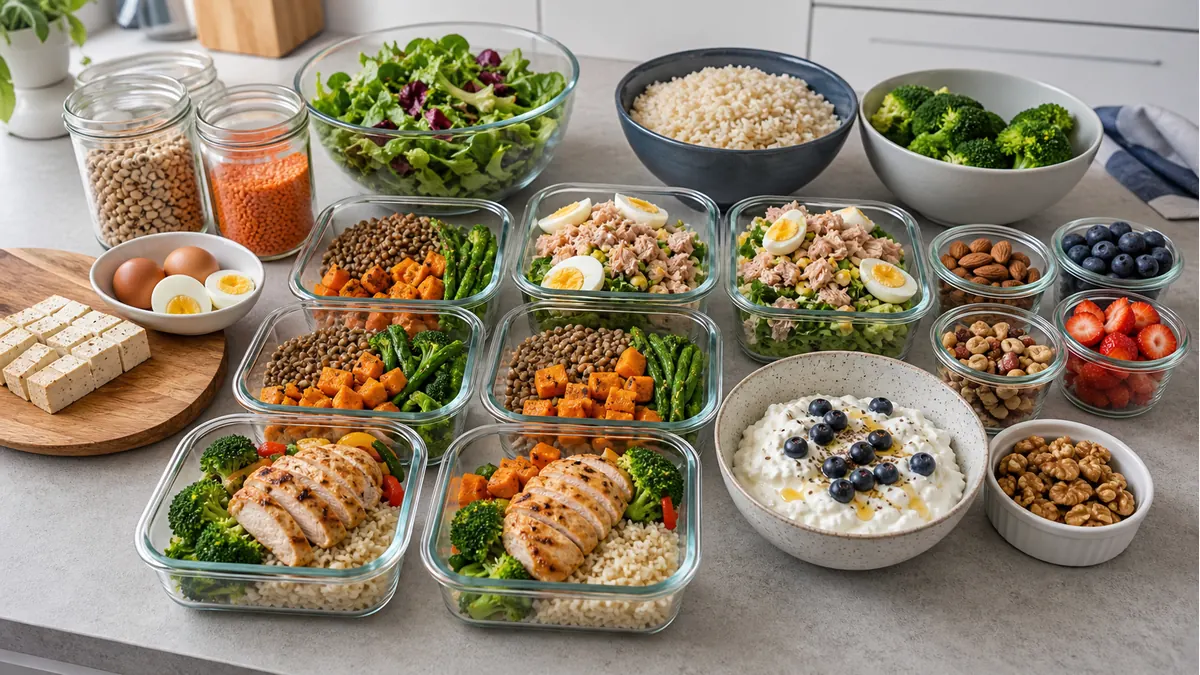
- Breakfast: 200 g 0% Greek yogurt + 50 g oats + 100 ml skimmed milk = ~29 g protein, ~335 kcal.
- Lunch: 1 tin tuna in spring water + large salad + 1 tbsp olive oil = ~28 g protein, ~320 kcal.
- Dinner: 180 g grilled chicken breast (cooked weight) + 80 g brown rice (dry weight) + 150 g broccoli = ~66 g protein, ~630 kcal.
- Snack: 200 g cottage cheese + cherry tomatoes = ~24 g protein, ~190 kcal.
- Total: ~147 g protein, ~1,475 kcal — leaving about 325 kcal for additional carbs, fats, or a second snack.
- Adding 2 boiled eggs at any point adds 13 g protein for ~160 kcal — a simple way to bridge any remaining gap.
Protein Timing: Does It Matter?
Spreading protein across the day rather than eating most of it in one sitting is the widely used practical approach: aim for roughly 30–50 g per meal across 3–4 eating occasions. Total daily protein matters more than precise timing, so treat a protein-containing meal near training as useful rather than essential.
The anabolic window (the idea that you must eat protein immediately post-workout or lose all gains) is largely overstated. What matters most is total daily protein intake — not timing. If you eat enough protein across the day, the exact timing is a minor detail.
The Best Protein Sources for Dieting in the UK
The most effective protein sources for dieting share two qualities: they are high in protein relative to calories, and they are filling. The best choices available in UK supermarkets include chicken breast (31 g protein per 100 g cooked, ~165 kcal), tinned tuna in spring water (25 g per 100 g, ~100 kcal), 0% Greek yogurt (10 g per 100 g, ~57 kcal), cottage cheese (12 g per 100 g, ~80 kcal), egg whites (11 g per 100 g, ~50 kcal), and cooked prawns (20 g per 100 g, ~90 kcal).
Use our free meal plan generator to create a complete high-protein week with calculated protein per meal. You can specify your supermarket, calorie target, and the generator automatically distributes protein across all meals.
Frequently Asked Questions
How much protein should I eat per day to lose fat?
For fat loss while preserving muscle, many active adults use 1.6–2.2 g of protein per kg of body weight per day. A 75 kg person would plan roughly 120–165 g daily. Use the higher end mainly when also doing regular resistance training.
Does eating more protein really help with weight loss?
It often helps, though not by magic. Protein is more filling per calorie than carbohydrate or fat, so raising it tends to reduce how much people eat overall without consciously trying. How large that effect is varies a lot between individuals, and it does not override total calories.
When is the best time to eat protein?
Total daily protein intake matters more than timing. Distributing protein across 3–4 meals (30–50g per meal) is a practical way to support muscle protein synthesis through the day. A protein-containing meal within a few hours of resistance training is a sensible habit, but it is not essential if your daily total is met.
Want this as a full 7-day plan?
We'll email the matching plan, its shopping list and a printable copy.
We'll send: High-Protein Low Calorie Plan — 1,500 kcal
Want a new plan every week? Join the MealPrep+ waitlist.
Find Your UK Supermarket Meal Plan
Answer seven quick questions to find a realistic weekly plan for your supermarket, calorie target, budget and dietary preferences.
Find My Meal Plan →