Meal Prep for Beginners UK — How to Start and Save Money on Food
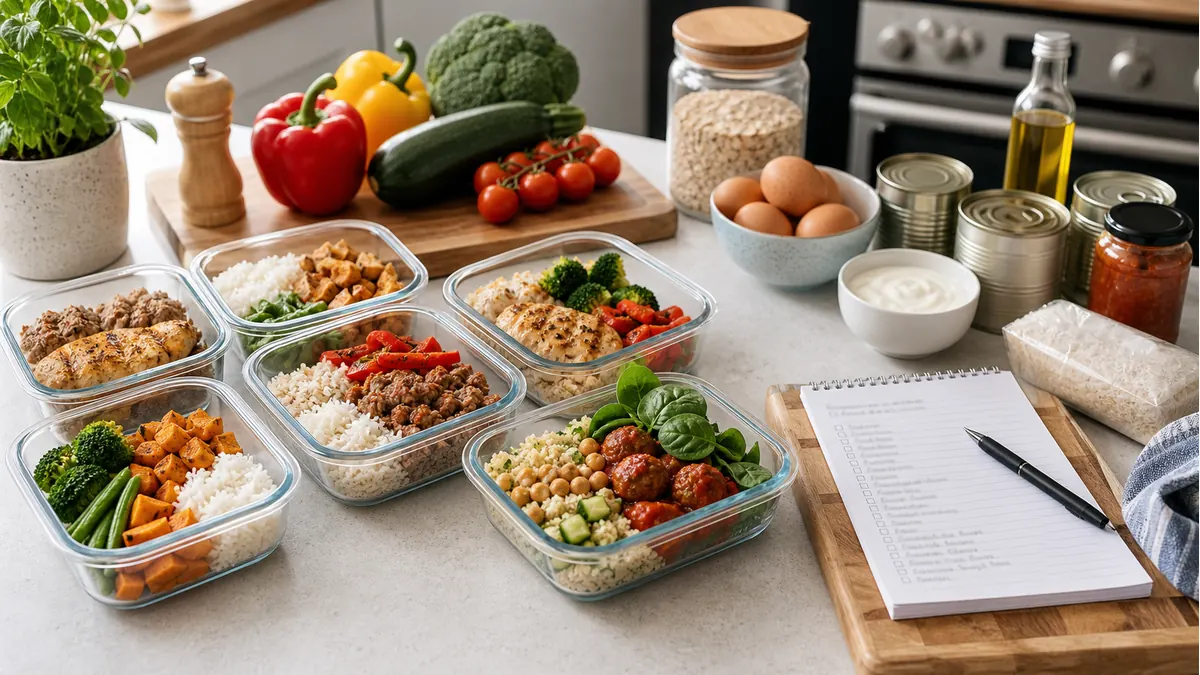
Meal prep is one of the few habits that makes eating well and spending less easier at the same time. Spending two to three hours cooking on a Sunday can set up the week, with the first couple of days kept chilled and later portions frozen, reducing the daily temptation of takeaways, meal deals, and snack purchases that drain your food budget and sabotage your diet. This guide covers everything a complete beginner needs to start meal prepping in the UK — what to cook, how to store it, and what to expect in your first few weeks.
As an Amazon Associate I earn from qualifying purchases. Product prices and availability can change on Amazon UK.
Containers to Start With
A budget plastic set and a glass set, so you can start cheap or start upgraded.
Product formats and care details follow current Amazon listing or manufacturer information, not hands-on testing. Check the live listing before buying.
Containers to Start With: quick comparison
Compare 2 options first, then scroll for the longer buying notes.
- Material
- Reusable plastic
- Price
- Budget
Best starter pack
20 pack - 3 compartmentsA large divided-container pack for people who want low cost per tub and enough boxes for serious batch cooking.
- Material
- Reusable plastic
- Format
- 20 pack
- Layout
- 3 compartments
Avoid if: You want a premium eating experience or stain-resistant bases.
- Material
- Glass
- Price
- Mid-range
Best balanced glass set
5 pack - 1 compartmentA strong mid-range pick for people moving from plastic to glass meal prep containers.
- Material
- Glass
- Format
- 5 pack
- Layout
- 1 compartment
Avoid if: You commute with several meals at once and need lightweight tubs.
- Material
- Reusable plastic
- Price
- Budget
Vinsani 3 Compartment Meal Prep Containers
A large divided-container pack for people who want low cost per tub and enough boxes for serious batch cooking.
Best for: Bulk weekday lunches, freezer portions, and beginner meal prep
Buy if: You want the lowest cost per usable lunch tub.
Avoid if: You want a premium eating experience or stain-resistant bases.
- Price level
- Budget
- Material
- Reusable plastic
- Set format
- 20 pack
- Before buying
- Check the live Amazon listing
Watch out: Plastic tubs can stain with tomato sauces or curries over time.
See Amazon price →Pros, cons and key features
- Layout
- 3 compartments
- Storage fit
- Excellent for freezer batches and high-volume prep
- Strong container count
- Clear portion sections
- Good for freezer rotation
- Can stain with tomato or curry
- Still takes cupboard space
- Three compartments for protein, carbs, and vegetables
- Lightweight enough for commuting or gym bags
- Good choice when you want many tubs for batch cooking
- Material
- Glass
- Price
- Mid-range
Harbour Housewares Glass Containers with Airtight Lids
A strong mid-range pick for people moving from plastic to glass meal prep containers.
Best for: A balanced glass upgrade without paying premium-set prices
Buy if: You want one sensible glass lunch box for each weekday.
Avoid if: You commute with several meals at once and need lightweight tubs.
- Price level
- Mid-range
- Material
- Glass
- Set format
- 5 pack
- Before buying
- Check the live Amazon listing
Watch out: Glass is heavier than plastic for commuting.
See Amazon price →Pros, cons and key features
- Layout
- 1 compartment
- Storage fit
- Best all-round workweek glass setup
- Good workweek format
- Glass resists stains
- Strong mid-range value signal
- Heavier than plastic
- Only five containers
- Airtight-style lids for fridge storage
- Glass base avoids staining from curry or tomato sauce
- Good everyday size for weekday lunches
A Kitchen Scale Is the Other Worthwhile Investment
Weighing portions removes the guesswork mentioned above.
Salter Arc Digital Kitchen Scale
A slim, add-and-weigh digital scale with a 3kg capacity, useful for portioning rice, protein and vegetables precisely rather than guessing by eye.
Best forWeighing portions accurately for calorie or macro tracking
Good to knowNo liquid measurement mode; for sauces and liquids, a scale with an Aquatronic function is more useful.
See Amazon price →What Is Meal Prep and Why Does It Work?
Meal prep means cooking a batch of food in advance — typically on a Sunday — and portioning it into containers for use across the following week. It removes the two biggest obstacles to healthy eating: time pressure (you've already cooked) and decision fatigue (you know exactly what you're eating).
The financial benefits are significant. A bought lunch from a café or sandwich shop often costs £5–7 (a supermarket meal deal is nearer £4–5). A home-cooked equivalent (chicken and rice, pasta salad, or a wrap) costs £1.20–1.80. Replacing five £5–7 lunches a week saves roughly £16–29 per week, or about £70–125 per month. Cut a takeaway or two as well and the monthly saving can pass £100.
What You Need to Start Meal Prepping
You do not need specialist equipment to start meal prepping. The essentials are: a large baking tray, a large saucepan, a frying pan, a rice cooker or pot, a sharp knife, and a chopping board. That's likely everything you already own.
Containers are the only investment worth making. Rectangular 1-litre glass meal prep containers stack neatly in the fridge and are microwave, dishwasher, and freezer safe. A set of five glass containers costs around £15–20 on Amazon and lasts for years. Plastic containers are cheaper but stain and warp over time.
- 5 × 1-litre rectangular glass containers (lunches or dinners) — £15–20
- 5 × 500 ml glass jars (overnight oats, yogurt bowls) — £8–12
- A set of smaller 250 ml containers (snacks, sauces) — £6–10
- A digital kitchen scale — £8–12 at Tesco or Argos
The Best Foods to Meal Prep as a Beginner
Some foods meal prep far better than others. The best beginner meal prep foods are those that reheat well, freeze well for later-week portions, and are calorie- and protein-dense relative to their cost. Start with these staples and you will have the foundation for almost any meal.
- Chicken breast — batch-poach or roast 1 kg at 200°C for 25 minutes. Use chilled portions within 2 days and freeze later-week portions.
- Brown rice — cook 500 g dry weight (makes about 1.2 kg cooked). Cool quickly, portion into 150–200 g servings, refrigerate promptly, and use chilled rice within about 24 hours.
- Oats — rolled oats prepared as overnight oats the night before take 2 minutes. No cooking required — mix oats, milk, and Greek yogurt in a jar before bed.
- Boiled eggs — hard-boil a smaller batch and keep chilled; for this plan, use within 2 days or cook a second batch midweek.
- Roasted vegetables — toss mixed peppers, courgette, broccoli, and sweet potato in olive oil spray and roast at 200°C for 25 minutes. Add to any meal throughout the week.
- Lentil or bean dishes — dahl, chilli, or bean stew keeps well for the next couple of days; freeze later portions. Cheap, high-protein, and filling.
A Simple First Meal Prep Session (Under 2 Hours)
Here is a structured two-hour Sunday meal prep session that a complete beginner can follow. It sets up five lunches and the first two breakfasts, the meals most people find hardest to keep on track.
- Start the rice: Add 500 g brown rice and 1 litre water to a large saucepan. Bring to the boil, reduce to a simmer, cover, and cook for 25 minutes.
- Prep the chicken: Season 1 kg chicken breast with salt, pepper, and garlic powder. Bake at 200°C for 25 minutes (or until internal temperature reaches 75°C).
- While the chicken and rice cook: Chop mixed peppers, courgette, and broccoli. Toss in olive oil spray and roast in a separate tray at 200°C for 20–25 minutes.
- Prepare overnight oats for Monday and Tuesday: into each of 2 jars, add 60 g oats, 150 ml skimmed milk, 100 g 0% Greek yogurt, and a handful of frozen berries. Seal and refrigerate, and mix the rest of the week's jars the night before (it takes 2 minutes).
- Hard-boil 4 eggs for Monday and Tuesday: place in boiling water for 10 minutes, then transfer to cold water for 5 minutes.
- Slice the cooked chicken and portion into 5 containers. Add a portion of rice and vegetables to each. Once cooled, refrigerate Monday's box and freeze the other four; move each one to the fridge to defrost the night before.
- Clean up while everything cools. Total active time: approximately 45 minutes.
How Long Does Meal-Prepped Food Last?
For UK food-safety guidance, cooked leftovers kept in the fridge should be eaten within 2 days, while cooked rice is best cooled quickly, refrigerated promptly, and used within about 24 hours. A Sunday cook can still cover the working week if you chill the first couple of days and freeze later portions straight after cooking.
Most cooked proteins, grains, soups and vegetables freeze well. Portion chicken, stews and vegetable mixes into individual containers and freeze on Sunday; defrost in the fridge overnight for later-week meals. This strategy lets you batch cook less frequently without relying on long fridge storage.
- Cooked chicken breast: eat refrigerated portions within 2 days, freeze later portions.
- Cooked brown rice: cool quickly, refrigerate promptly, use chilled rice within about 24 hours, and reheat once until steaming hot.
- Roasted vegetables: eat within 2 days or freeze later portions.
- Hard-boiled eggs: keep chilled and use within 2 days for this plan, or cook a second batch midweek.
- Overnight oats: keep sealed and chilled, and use within 2 days for best quality.
- Bean/lentil stew or chilli: eat within 2 days or freeze later portions.
Meal Prep Labels: Staying Organised
Labelling your meal prep containers avoids confusion — especially when freezing batches. Write the contents and date on masking tape, or use dedicated meal prep labels designed to adhere to glass and withstand the freezer and dishwasher.
Dedicated freezer-safe meal prep labels are available in multi-packs and are particularly useful if you are batch-cooking multiple recipes simultaneously. Use our free meal plan generator to build your week, then label each container accordingly.
Frequently Asked Questions
How long does it take to see results from meal prep?
Most people notice improved energy and better food choices within the first week. Visible physical changes from consistent calorie control typically take 3–4 weeks. Weight loss of 0.3–0.5 kg per week is the realistic expectation — judge your progress over monthly averages rather than day-to-day.
Do I need special equipment for meal prep?
No. The essential equipment is a large baking tray, a large saucepan, a frying pan, a knife, a chopping board, and five 1-litre sealable containers. A set of glass meal prep containers costs £15–20 on Amazon and is the only worthwhile investment beyond standard kitchen kit.
Can I meal prep if I live in a small flat with a small kitchen?
Yes. Batch cooking does not require a large kitchen — it requires good organisation. Cooking one protein (chicken), one grain (rice), and one vegetable component simultaneously on two hob rings and one oven tray fits in even the smallest UK kitchen and takes under 90 minutes.
Want this as a full 7-day plan?
We'll email the matching plan, its shopping list and a printable copy.
We'll send: High-Protein Low Calorie Plan — 1,500 kcal
Want a new plan every week? Join the MealPrep+ waitlist.
Find Your UK Supermarket Meal Plan
Answer seven quick questions to find a realistic weekly plan for your supermarket, calorie target, budget and dietary preferences.
Find My Meal Plan →