Intermittent Fasting Meal Plan UK: 16:8 Guide and What to Eat
Intermittent fasting (IF) has become one of the most popular dietary approaches in the UK, with 16:8 (16 hours fasting, 8 hours eating) being the most widely used protocol. The research on its effectiveness for weight loss is solid — but largely because it is a convenient way to create a calorie deficit, not because fasting has unique metabolic benefits beyond what a calorie deficit achieves. This guide explains 16:8 practically for UK adults, including what to eat, when to eat, and how to combine it with meal prep.
What Is Intermittent Fasting and Does It Work?
Intermittent fasting is not a diet in the traditional sense — it is an eating pattern that restricts food consumption to a defined window each day. The 16:8 protocol means eating all your meals within an 8-hour window (typically 12 noon to 8 pm) and fasting for the remaining 16 hours.
The evidence on IF for weight loss is positive but nuanced. Multiple meta-analyses find that IF produces similar weight loss to continuous calorie restriction when total calories are matched — meaning the fasting itself is not metabolically superior to a standard calorie deficit. What it does do well is make calorie restriction easier for many people by reducing the number of eating occasions and eliminating late-night snacking.
For some people, skipping breakfast and eating only from midday onwards naturally reduces total daily calorie intake without conscious tracking. For others, delaying eating until noon simply makes them ravenous and leads to larger meals. IF works best for those who are not hungry in the mornings and tend to overeat in the evenings.
Getting Started With 16:8
The most common 16:8 schedule for UK adults working standard hours: fast from 8 pm the previous evening until 12 noon; eat between 12 noon and 8 pm; fast from 8 pm onwards. This means skipping breakfast and having your first meal of the day at lunchtime.
The first 1–2 weeks can involve significant morning hunger as your body adjusts. Black coffee (no milk or sugar), black tea, and water are all permitted during the fasting window and help suppress hunger. After 2–3 weeks, many people find morning hunger eases as they get used to the new pattern.
If you train in the mornings, eating before exercise is generally better for performance. A modified 14:10 protocol (10-hour eating window) may be more appropriate for morning trainers — eating from 8 am to 6 pm rather than skipping breakfast entirely.
What to Eat During the Eating Window
Having an 8-hour eating window does not give permission to eat anything in unlimited quantities — total calorie intake still determines weight loss. The most effective approach is to plan two or three well-structured meals within the window rather than grazing continuously.
A typical 16:8 day at 1,600 kcal: Meal 1 at noon — large high-protein lunch (500–600 kcal, 40–50 g protein): chicken rice bowl, tuna salad, or egg-based dish. Snack at 3 pm — Greek yogurt with berries or nuts (150–200 kcal, 15–20 g protein). Dinner at 7 pm — high-protein dinner (700–800 kcal, 50–60 g protein): salmon with vegetables and brown rice, or chicken and lentil curry.
16:8 Meal Prep Strategy
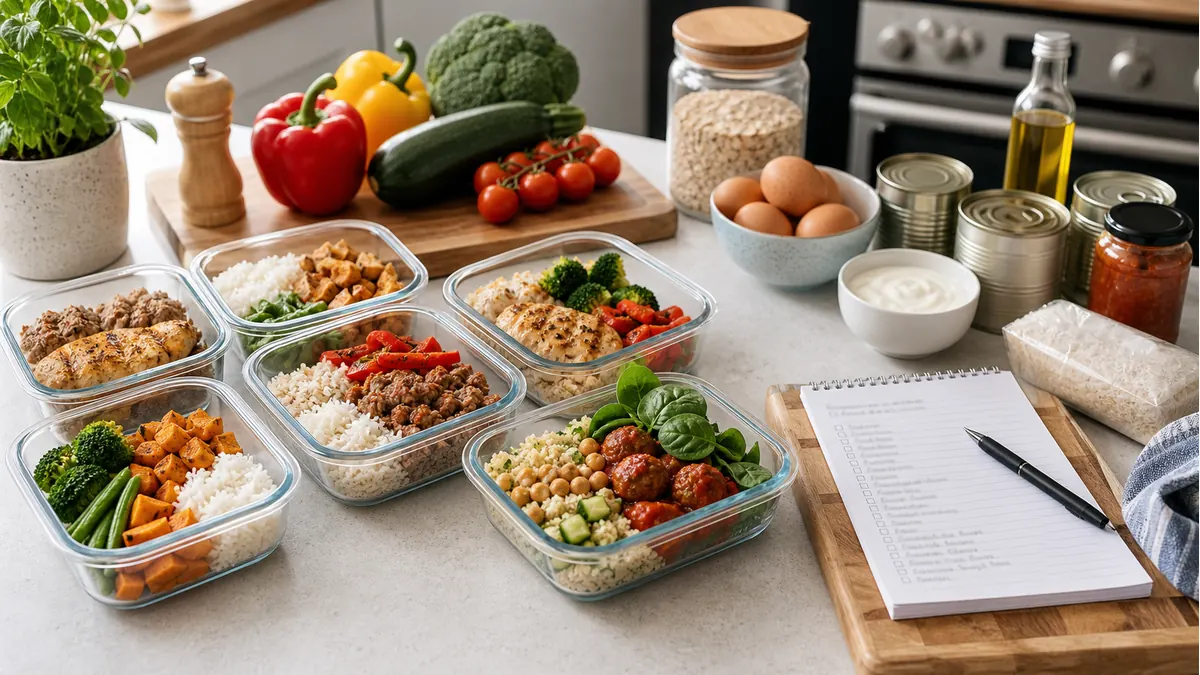
Intermittent fasting pairs very naturally with meal prep because you have fewer meals to prepare. Batch cooking Sunday lunches and dinners covers both meals for the week, with a simple snack bridging the gap.
Effective batch-cook plan for 16:8: cook a large protein base (chicken breast, salmon, or turkey mince), a grain (brown rice or quinoa), and roasted vegetables. Portion into 10 containers — 5 lunches and 5 dinners — keeping the first two days in the fridge and freezing the rest once cooled. This takes 1.5–2 hours on Sunday and eliminates all cooking decisions for the week.
Is 16:8 Right for You?
Intermittent fasting is a useful tool but not a magic solution. It tends to work well for: people who are not hungry in the morning; those who overeat in the evening and need a hard stop; people who find constant calorie tracking difficult and prefer a time-based rule; and those who already eat most of their calories in the afternoon and evening.
It is less appropriate for: people with a history of disordered eating; those who train hard in the morning and need pre-workout fuel; pregnant or breastfeeding women; and people who experience significant morning hunger and find skipping breakfast increases rather than decreases their total intake.
Whether you fast or not, total daily calories and protein intake remain the primary determinants of weight loss and body composition. Use our free meal plan generator to build a calorie-controlled plan — the meal timings can be adjusted to suit a 16:8 schedule.
Frequently Asked Questions
Does intermittent fasting work for weight loss?
Yes, but primarily because it helps create a calorie deficit — not because of special metabolic effects from fasting. Multiple meta-analyses find 16:8 intermittent fasting produces similar weight loss to continuous calorie restriction when total calories are matched. It is most effective for people who naturally skip breakfast and tend to overeat in the evenings.
What can I eat during the fasting window on 16:8?
During the 16-hour fasting window, only zero-calorie drinks are permitted: water, sparkling water, black coffee (no milk or sugar), black tea, and herbal teas. Even small amounts of milk, cream, or sweeteners containing calories technically break the fast, though the practical impact on fat loss is minimal.
Is intermittent fasting safe?
For healthy adults, 16:8 intermittent fasting is generally safe. It is not recommended for: pregnant or breastfeeding women, people under 18, those with a history of eating disorders, people with type 1 diabetes or on insulin, or anyone with a medical condition requiring regular food intake. Always consult a GP if unsure.
Want this as a full 7-day plan?
We'll email the matching plan, its shopping list and a printable copy.
We'll send: High-Protein Low Calorie Plan — 1,500 kcal
Want a new plan every week? Join the MealPrep+ waitlist.
Find Your UK Supermarket Meal Plan
Answer seven quick questions to find a realistic weekly plan for your supermarket, calorie target, budget and dietary preferences.
Find My Meal Plan →