Muscle Building Meal Plan UK: Nutrition for Muscle Gain
Building muscle requires two things above all else: consistent progressive resistance training and a diet that provides enough protein and calories to support muscle growth. This guide covers exactly how much you need to eat, which foods deliver the best results for UK gym-goers, and a practical weekly meal plan to support muscle growth without excessive fat gain.
How Many Calories Do You Need to Build Muscle?
Building muscle requires a calorie surplus — eating slightly more than your Total Daily Energy Expenditure (TDEE). However, the size of the surplus matters. A very large surplus (500+ calories above TDEE per day) accelerates fat gain significantly faster than muscle gain, since muscle can only be built at a limited rate regardless of calorie intake.
A modest surplus of roughly 200–300 calories per day above TDEE is the usual starting point for natural trainees. The logic of this "lean bulk" approach is simple: a bigger surplus does not build muscle faster, it just adds more fat alongside it. For a moderately active 80 kg man with a TDEE of 2,500 kcal, this means eating 2,700–2,800 kcal per day.
Track your weight weekly. You should gain approximately 0.2–0.4 kg per week on an effective muscle-building plan. Faster than this and you are gaining primarily fat; slower and your calorie surplus is too small.
Protein Requirements for Muscle Building
Protein is the building material of muscle. For muscle gain, the evidence supports 1.6–2.2 g of protein per kilogram of body weight per day. An 80 kg man needs 128–176 g of protein daily; a 65 kg woman needs 104–143 g.
Distribute protein intake across 3–5 meals (30–50 g per meal) to maximise muscle protein synthesis throughout the day. There is strong evidence for consuming 30–40 g of protein within two hours of a resistance training session to support muscle repair and growth.
Best Muscle-Building Foods Available in UK Supermarkets
These foods provide the best combination of protein quality, calorie density, and cost for muscle building:
- Chicken breast (1 kg frozen, Aldi, ~£3.50): about 22–24 g protein per 100 g raw (31 g once cooked). The most cost-effective muscle-building protein available.
- Whole eggs (12-pack, Aldi, ~£2.60): 6.3 g protein per egg plus healthy fats, vitamin D, and leucine — the amino acid most important for triggering muscle protein synthesis.
- Lean beef mince (5% fat, Tesco, 500 g, ~£3.50): 26 g protein per 100 g plus creatine, zinc, and iron — all important for training performance and recovery.
- Full-fat Greek yogurt (Tesco, 500 g, ~£1.50): higher in calories than 0% for a calorie surplus; 8–10 g protein per 100 g.
- Brown rice or basmati (Aldi, 1 kg, ~£0.89): 77 g carbs per 100 g dry — essential for replenishing glycogen after training.
- Oats (Aldi, 1 kg, ~£0.69): high in beta-glucan, slow-digesting carbs, and surprisingly high in protein (12 g per 100 g dry).
- Whole milk (Tesco, 2 L, ~£1.30): a classic muscle-building supplement — 3.5 g protein per 100 ml plus saturated fat and calories. GOMAD (gallon of milk a day) is unnecessary; 500–1,000 ml per day is sufficient.
- Salmon (frozen fillets, Iceland or Aldi): high protein, omega-3 fatty acids, and vitamin D — all important for training recovery and hormonal health.
A Sample 2,500 kcal Muscle-Building Day
Breakfast (7 am): 4 scrambled eggs + 3 slices wholemeal toast + 200 ml whole milk (~700 kcal, 45 g protein).
Post-training snack (10 am, if morning training): 200 g Greek yogurt + banana + 30 g oats (~350 kcal, 25 g protein).
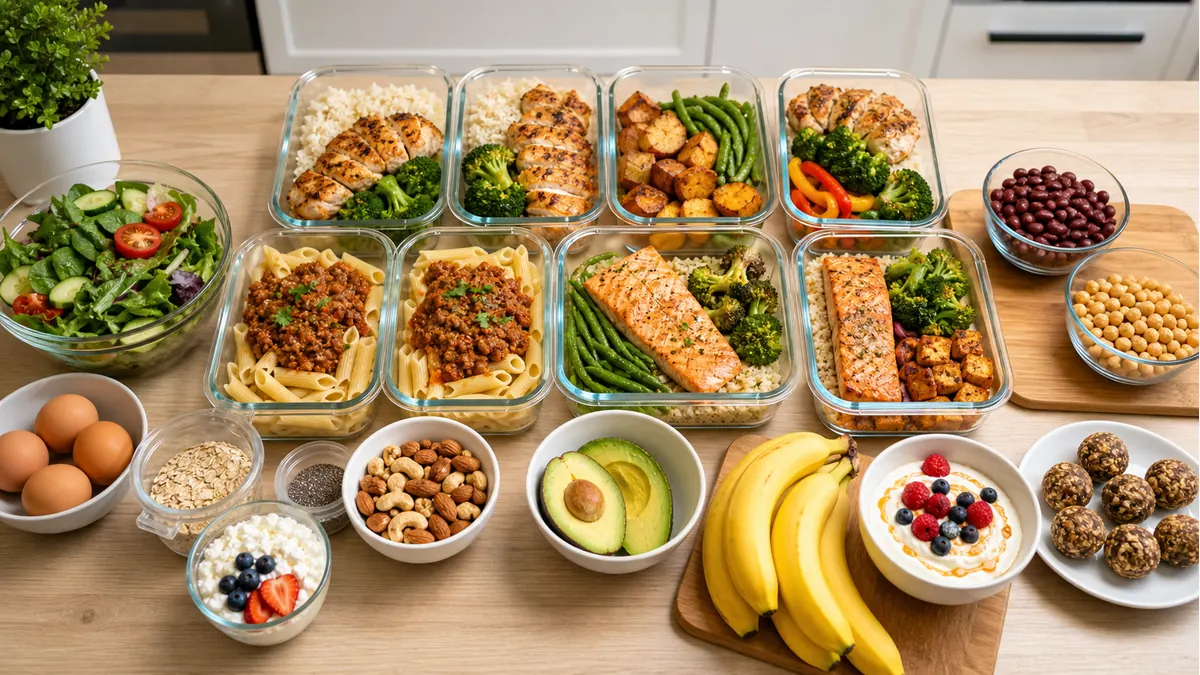
Lunch (1 pm): 200 g chicken breast (weighed raw) + 100 g dry brown rice + large roasted vegetable portion (~720 kcal, 57 g protein).
Dinner (7 pm): 200 g lean beef mince bolognese + 100 g dry wholemeal pasta + side salad (~750 kcal, 50 g protein).
Evening snack (9 pm): 200 g cottage cheese + mixed nuts (~300 kcal, 25 g protein).
Total: ~2,800 kcal, ~200 g protein. Adjust portions up or down based on training volume and weekly weight trend.
Common Muscle-Building Nutrition Mistakes
Not eating enough total calories is the most common reason muscle gain stalls. Many gym-goers eat high protein but remain at maintenance calories — sufficient to preserve muscle but not build it. Track your calories for two weeks to confirm you are consistently above your TDEE.
Skipping carbohydrates is counterproductive for muscle building. Carbohydrates are the primary fuel for resistance training, and inadequate carbohydrate intake impairs training performance, reduces training volume, and limits the stimulus for muscle growth. Unless you are following a specific ketogenic protocol with experience, keep carbohydrates as the dominant calorie source.
Frequently Asked Questions
How much should I eat to build muscle?
Aim for a calorie surplus of 200–300 kcal per day above your TDEE. This produces roughly 0.2–0.4 kg per week of weight gain, of which most should be muscle if protein intake (1.6–2.2g/kg/day) and training are consistent. A larger surplus (500+ kcal/day) accelerates fat gain more than muscle gain.
How long does it take to build noticeable muscle?
Most beginners see noticeable muscle definition within 8–12 weeks of consistent resistance training with adequate protein. Significant changes in body composition take 3–6 months. Natural muscle gain is slow — approximately 1–2 kg of lean muscle per month is achievable for beginners; 0.25–0.5 kg per month for more experienced lifters.
Is chicken and rice good for muscle building?
It can be a practical muscle-building meal because it combines protein and carbohydrate in an easy-to-adjust portion. 200g chicken breast weighed raw (about 45g protein) with 80g dry brown rice (62g carbs) and broccoli provides about 565 kcal and 54g protein.
Want this as a full 7-day plan?
We'll email the matching plan, its shopping list and a printable copy.
We'll send: High-Protein Low Calorie Plan — 1,500 kcal
Want a new plan every week? Join the MealPrep+ waitlist.
Find Your UK Supermarket Meal Plan
Answer seven quick questions to find a realistic weekly plan for your supermarket, calorie target, budget and dietary preferences.
Find My Meal Plan →