Vegan Meal Prep UK: High-Protein Weekly Plan
Vegan meal prep gets a bad reputation for being difficult and protein-sparse — but a well-planned vegan week can hit 100–130 g of protein per day using affordable UK supermarket ingredients. The key is combining complementary plant proteins and anchoring every meal around a protein source. This guide covers everything you need: daily protein targets, the best vegan protein sources available in UK supermarkets, and a complete batch-cook plan for the week.
Hitting Protein on a Vegan Diet
Plant proteins are generally less bioavailable than animal proteins and lower in one or more essential amino acids. This does not mean you cannot build muscle or maintain weight on a vegan diet — but it does mean you need to be more deliberate about combining protein sources and hitting a slightly higher total intake to account for lower bioavailability.
Many vegan athletes and dieters aim for about 1.8–2.2 g of protein per kg of body weight — the upper part of the 1.6–2.2 g/kg range often used for omnivores — because plant proteins are less concentrated and more varied in amino acid profile. For a 70 kg person, that means 126–154 g of protein per day from plant sources.
The key is variety. By combining different plant protein sources (legumes + wholegrains, soy + nuts, tofu + seeds), you ensure a full complement of essential amino acids across the day. You do not need to combine them within every meal — daily totals are what matters.
Best Vegan Protein Sources in UK Supermarkets
These are the highest-impact vegan protein sources available at Tesco, Aldi, Sainsbury's, and Asda:
- Firm tofu: ~15 g protein per 100 g, ~145 kcal. Tesco, Sainsbury's, and Asda sell 280–400 g blocks for £1.50–2.50. Freeze, then thaw for a chewier texture that absorbs marinades better.
- Edamame beans (frozen): 11 g protein per 100 g, ~120 kcal. Available frozen at Tesco and Sainsbury's for ~£2 per 500 g. Outstanding vegan protein-to-calorie ratio.
- Lentils (red or green, cooked): 9 g protein per 100 g, ~116 kcal. Aldi sells 500 g dried red lentils for 75p — one of the cheapest protein sources available.
- Chickpeas (tinned): 7 g protein per 100 g drained. 4 × 400 g tins at Aldi for ~£2.20. Bulk any curry or salad.
- Black beans (tinned): 8.9 g protein per 100 g. Excellent for chilli, burrito bowls, and salads.
- Soy mince / textured vegetable protein (TVP): about 50 g protein per 100 g dry (roughly 15–17 g once rehydrated). Available at most supermarkets for £1–2 per 300 g. Rehydrates in boiling water and takes on flavours well.
- Tempeh: 19 g protein per 100 g — more than tofu, and a whole food rather than a processed protein. Increasingly available at Tesco and Sainsbury's for ~£2.50 per 200 g.
- Seitan (wheat protein): 25 g protein per 100 g. Available ready-made or as vital wheat gluten for home preparation.
- Pumpkin seeds: about 24 g protein per 100 g. Add to yogurt, porridge, or salads.
- Hemp seeds: 32 g protein per 100 g. Expensive but extremely protein-dense. 2–3 tablespoons per day in smoothies or on yogurt.
A Sample Vegan Meal Prep Week (Under £35)
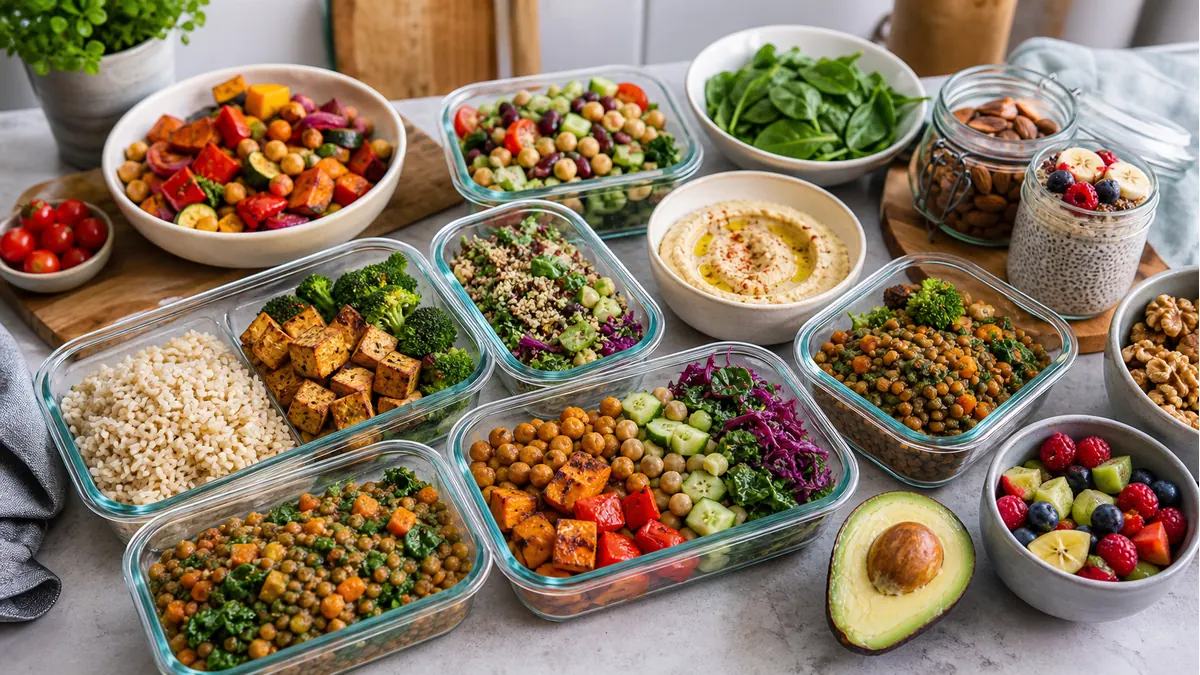
Sunday batch cook (approximately 2 hours): Cook a large pot of red lentil dal (500 g dry lentils + tinned tomatoes + onion + spices — 5 portions). Cook 500 g dry brown rice. Marinate and bake 2 blocks of tofu (slice, toss in soy sauce, garlic, and smoked paprika, bake at 200°C for 25 minutes). Prepare 2 overnight oat jars with oat milk, chia seeds, and frozen berries, and mix the rest the night before. Keep the first two days of dal, rice and tofu in the fridge and freeze the rest once cooled.
Monday–Friday meals from the prep: Breakfast — overnight oats with soy protein powder stirred in (25 g protein). Lunch — dal over brown rice with a handful of spinach (22 g protein). Dinner — tofu stir-fry with frozen edamame, mixed veg, and soy sauce over rice (28 g protein). Snack — 30 g pumpkin seeds + 200 g soy yogurt (16 g protein). Total daily protein: ~91 g.
To push protein higher: add 30 g hemp seeds to breakfast (+10 g protein), a second scoop of soy protein (+20 g), or swap the tofu for seitan (roughly +10–15 g per meal).
Vegan Micronutrients to Watch
A well-planned vegan diet can meet most nutritional needs, but three nutrients require active attention: vitamin B12 (not reliably found in unfortified plant foods — use fortified foods or a supplement; the Vegan Society suggests 10 mcg daily or 2,000 mcg weekly); vitamin D (10 mcg daily, at least from October to March in the UK; check the supplement is vegan); and long-chain omega-3 (EPA/DHA from algae-based supplements — flaxseed and walnuts provide ALA but conversion to EPA/DHA is limited).
Iron and calcium from plant sources are less bioavailable than animal sources. Vitamin C consumed alongside iron-rich foods (lentils + bell pepper, spinach + lemon juice) significantly improves iron absorption. For calcium, choose fortified oat or soy milk and eat calcium-rich vegetables like kale and broccoli regularly.
Frequently Asked Questions
How do vegans get enough protein in the UK?
The best UK vegan protein sources are: tempeh (19g/100g), seitan (25g/100g), edamame (11g/100g), firm tofu (~15g/100g), red lentils (9g/100g cooked), textured vegetable protein (about 50g/100g dry), pumpkin seeds (about 24g/100g), and hemp seeds (32g/100g). Combining these across the day provides all essential amino acids.
Can you build muscle on a vegan diet?
Yes, though it requires more planning than an omnivorous diet. Vegan athletes should target 1.8–2.2g of protein per kg of body weight (slightly higher than omnivores to account for lower bioavailability), prioritise leucine-rich plant sources (tofu, tempeh, edamame), and consider a vegan protein supplement to reach targets easily.
What supplements do vegans need in the UK?
The three essential supplements for UK vegans are: Vitamin B12 (fortified foods or a supplement — the Vegan Society suggests 10 mcg daily or 2,000 mcg weekly), Vitamin D (10 mcg daily, at least from October to March when UK sunlight is too weak), and long-chain omega-3 EPA/DHA from algae-based supplements (since ALA from flaxseed converts poorly to EPA/DHA).
Want this as a full 7-day plan?
We'll email the matching plan, its shopping list and a printable copy.
We'll send: Vegan Low Calorie Meal Plan — 1,500 kcal
Want a new plan every week? Join the MealPrep+ waitlist.
Find Your UK Supermarket Meal Plan
Answer seven quick questions to find a realistic weekly plan for your supermarket, calorie target, budget and dietary preferences.
Find My Meal Plan →