One Meal, Different Calorie Needs
A household rarely needs the same amount of food. Someone is cutting, someone trains five times a week, someone is thirteen and growing. The instinct is to cook separately, which doubles the work and usually collapses within a fortnight - and it is almost never necessary.
Every plan on the site states its own calories, protein and cost - browse them in the plan library, or use the quiz to get matched to one.
Scale the Plate, Not the Menu
The same chilli can be 450 kcal or 800 depending on the rice, the cheese and the sour cream, and none of that requires a second pan. Serve the shared part - the protein and the vegetables - in similar amounts to everyone, then let the starch and the toppings do the scaling. That single habit covers most of the range a normal household contains.
It also avoids the thing that makes separate cooking fail socially, which is that one person visibly eats a different, sadder meal. Everyone eating the same food in different quantities is a much easier arrangement to sustain than everyone eating different food.
What to Scale First, and What to Leave Alone
Scale carbohydrate and added fat first: rice, pasta, potatoes, oil, cheese, dressings. They carry the calories, they are added at the end, and adjusting them changes the total substantially without changing what the meal is.
Leave protein and vegetables roughly level. Protein is what keeps the person in a deficit full and the person training recovered, so cutting it is exactly the wrong lever - and the person eating less overall generally needs a higher proportion of protein, not a lower one. Vegetables are close to free in calorie terms and there is nothing to gain from rationing them.
Where This Should Not Apply
Children should not be put on a calorie-controlled plan as a side effect of an adult's. Growth needs energy, and portion restriction aimed at an adult goal is not appropriate for a child - if there is a genuine concern about a child's weight, that is a conversation with a GP or health visitor rather than something to solve by serving smaller plates.
The same caution applies to anyone pregnant, breastfeeding, recovering from illness, or eating under clinical supervision. In those cases the household plan should be built around their requirements and everyone else should scale up from it, which is the reverse of the usual direction.
Making It Practical Mid-Week
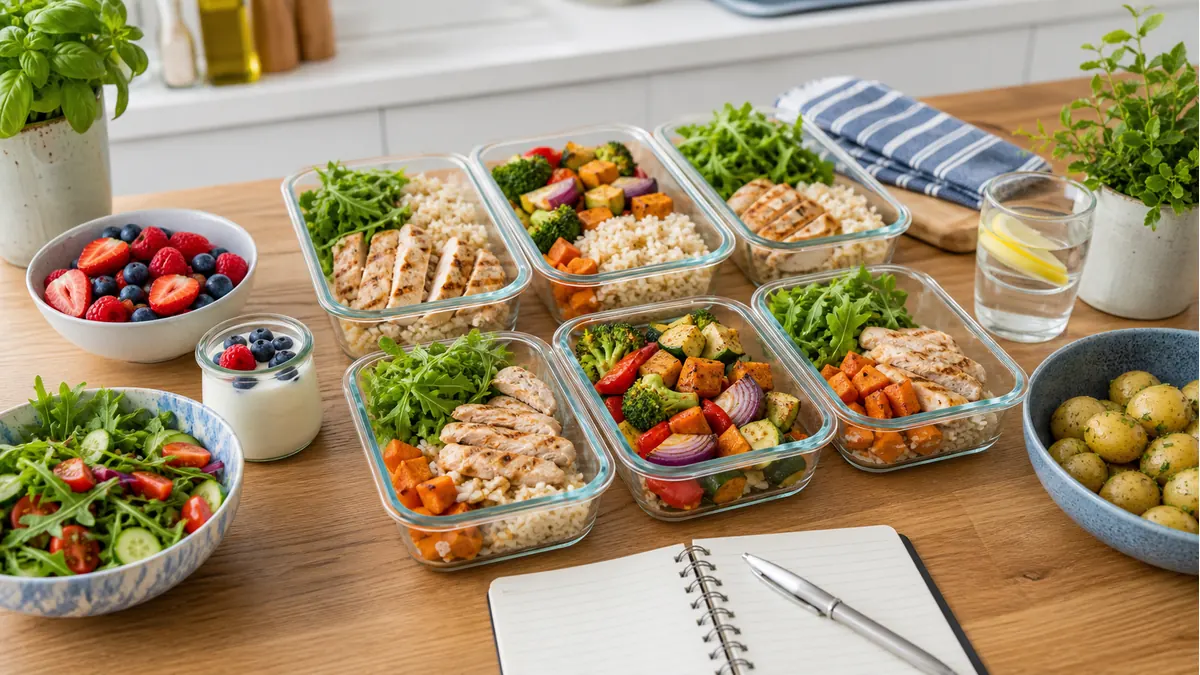
Cook the base and store the components separately where you can - sauce in one container, rice in another. Assembly at the point of eating makes scaling trivial and reheating better, because rice and sauce want different treatment anyway.
If you are prepping in advance rather than serving at a table, portion into labelled containers on the day you cook and write the target on the lid. Deciding portions once, while you are already thinking about it, works considerably better than deciding again every evening.
Frequently Asked Questions
How do I cook one meal for different calorie needs?
Keep the protein and vegetables similar for everyone and scale the starch and added fat. Rice, pasta, potatoes, oil and cheese carry most of the difference and are added at the end.
Should children eat smaller portions if a parent is dieting?
No. Children need energy to grow and should not be put on a calorie-controlled plan as a side effect of an adult goal. Speak to a GP or health visitor if you have a genuine concern.
Should the person eating less get less protein?
No - usually the opposite. Protein is what makes a smaller intake tolerable, so the person in a deficit generally wants a higher proportion of it. Scale the carbohydrate and fat instead.
Want this as a full 7-day plan?
We'll email the matching plan, its shopping list and a printable copy.
We'll send: High-Protein Low Calorie Plan — 1,500 kcal
Want a new plan every week? Join the MealPrep+ waitlist.
Find Your UK Supermarket Meal Plan
Answer seven quick questions to find a realistic weekly plan for your supermarket, calorie target, budget and dietary preferences.
Find My Meal Plan →