Half-Marathon Meal Prep on a Budget
A training week does not need a different expensive recipe every night. Repeating a few useful ingredients can reduce waste and decisions while leaving room for meals you enjoy. Begin with the food you already buy and the cooking time you genuinely have.
Build a Basket Around Shared Ingredients
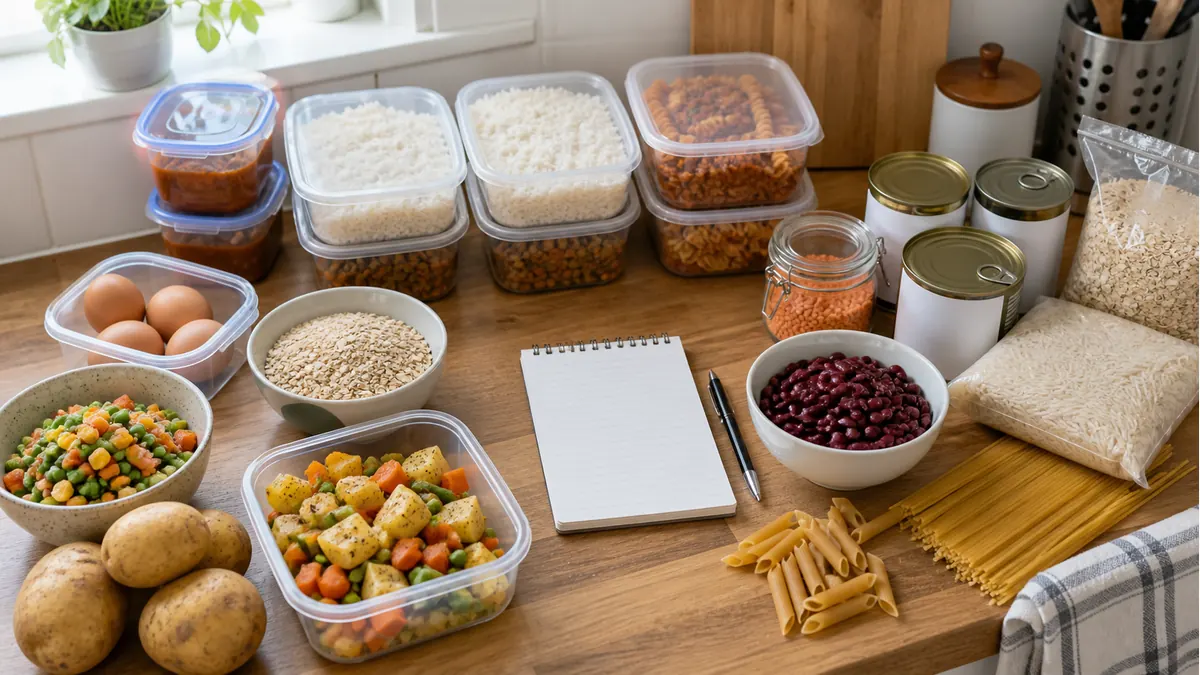
Oats, rice, pasta, potatoes, eggs, beans and tinned tomatoes appear in several meals in the linked budget example. Frozen vegetables let you take out only the amount you need. Compare unit prices and pack sizes rather than assuming that every larger pack is cheaper.
The site displays an estimated cost based on the actual ingredient quantities. That is not a guaranteed supermarket checkout total: buying whole packs, replenishing cupboard ingredients and local prices can change what you spend.
Cook Sauces Together and Rice When You Need It
Prepare bean chilli and tinned lentil bolognese in one cooking session. Divide into shallow portions, refrigerate portions for the next 48 hours and freeze the rest. Keep raw poultry and its utensils separate from ready-to-eat ingredients.
Cook rice fresh where practical. If preparing it ahead, cool quickly, ideally within one hour, refrigerate for no more than one day or freeze for later use. Label portions so the cooking schedule does not depend on memory.
Protect Meals Around Busy Training Days
A packed lunch and a prepared sauce can make an evening run easier to fit around work. Move meals within the week when plans change; do not skip lunch to compensate for a missed session.
The budget plan illustrates approximately 2,500 kcal a day. Individual needs vary, and affordability does not require deliberately under-fuelling training. Seek individual support if you struggle to eat enough for your activity.
Make Two Preparation Sessions Do Useful Work
At the first session, chop the onions and peppers for the chilli and prepare the lentil sauce. Keep the recipes separate so each container has a clear identity. Cool in shallow portions and label the containers before refrigerating or freezing them. Set aside tomorrow’s food, then freeze the later portions promptly rather than repeatedly opening a large pot through the week.
At the second session, check the remaining fresh ingredients before shopping again. Use the potatoes for jacket meals, prepare eggs for the next sandwich and portion the frozen vegetables needed for dinner. This is a chance to adjust to a changed work or training schedule. If a meal is postponed, freeze a suitable portion in time rather than extending its refrigerated storage because it was originally planned for Thursday.
Look at waste as well as headline price. A slightly larger bag of rice can be useful because it stores well when dry, while extra salad leaves may be wasted if you only need them once. Keep a short list of substitutions that genuinely fit the recipe and diet. Check quantities again when replacing an ingredient; equal pack sizes do not necessarily mean equal edible amounts or nutrition.
Frequently Asked Questions
Is this calorie target right for every runner?
No. These are example menus. Requirements vary with the person and training; choose appropriate portions and seek individual advice where needed.
Want this as a full 7-day plan?
We'll email the matching plan, its shopping list and a printable copy.
We'll send: Budget Runner Meal Plan — 2,500 kcal
Want a new plan every week? Join the MealPrep+ waitlist.
Find Your UK Supermarket Meal Plan
Answer seven quick questions to find a realistic weekly plan for your supermarket, calorie target, budget and dietary preferences.
Find My Meal Plan →