How Much Should a Week of Meal Prep Cost in the UK?
The honest answer is "it depends", but that is not very useful on its own. This guide gives representative weekly ranges for different meal prep approaches, and explains what actually moves the number up or down.
To turn this into a weekly plan, take the meal plan quiz or browse all UK meal plans.
Representative Weekly Ranges
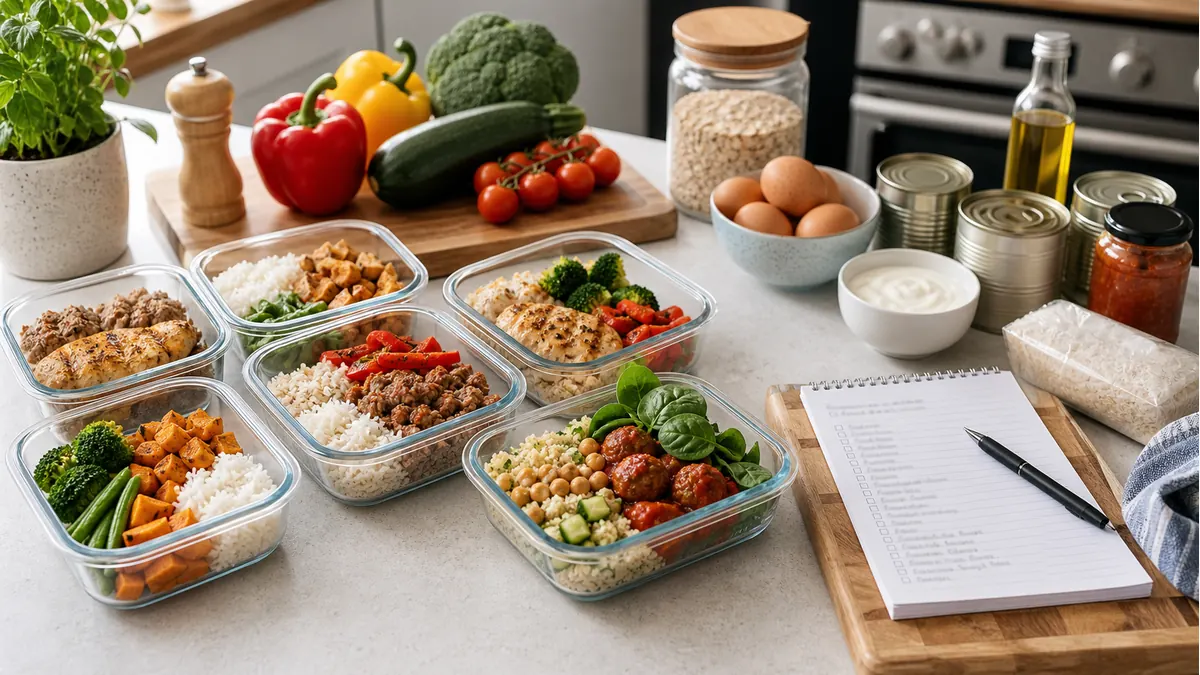
These ranges assume a mix of breakfasts, lunches and dinners batch-cooked for one person across a working week — about 14 meals, not every meal and snack in a seven-day week — using everyday ingredients rather than premium or specialist products. Use the shopping budget estimator above for a figure tailored to your supermarket, household size and protein preference.
They are not the figure shown on our meal plans. Each plan's estimate covers every meal and snack for seven days and prices each ingredient, including oil, spices and stock, at UK-wide average prices for the amount the recipes use, so it is usually higher than these ranges. See how meal-plan costs are estimated on the methodology page.
| Approach | Typical weekly range | Roughly per meal (14 meals) |
|---|---|---|
| Budget, discount supermarket | £20–30 | £1.40–2.15 |
| Standard shop, mainstream supermarket | £28–38 | £2.00–2.70 |
| Higher-protein shop | £32–45 | £2.30–3.20 |
What Actually Moves the Number
A handful of decisions account for most of the difference between the low and high end of the ranges above.
- Supermarket choice: discount supermarkets are typically the biggest single lever, see the cheapest UK supermarket comparison for specifics.
- Protein target: a higher-protein shop costs more, since protein-dense foods generally cost more per 100g than carbohydrate staples.
- Own-brand vs branded: own-brand ingredients are consistently cheaper for a similar result in most meal prep recipes.
- Batch size: cooking in bulk (a whole pack of chicken thighs rather than a small portion) usually lowers the cost per meal.
- Fresh vs frozen: frozen vegetables and frozen meat are often cheaper than fresh with a similar nutritional profile once cooked.
Why This Is Still Cheaper Than the Alternative
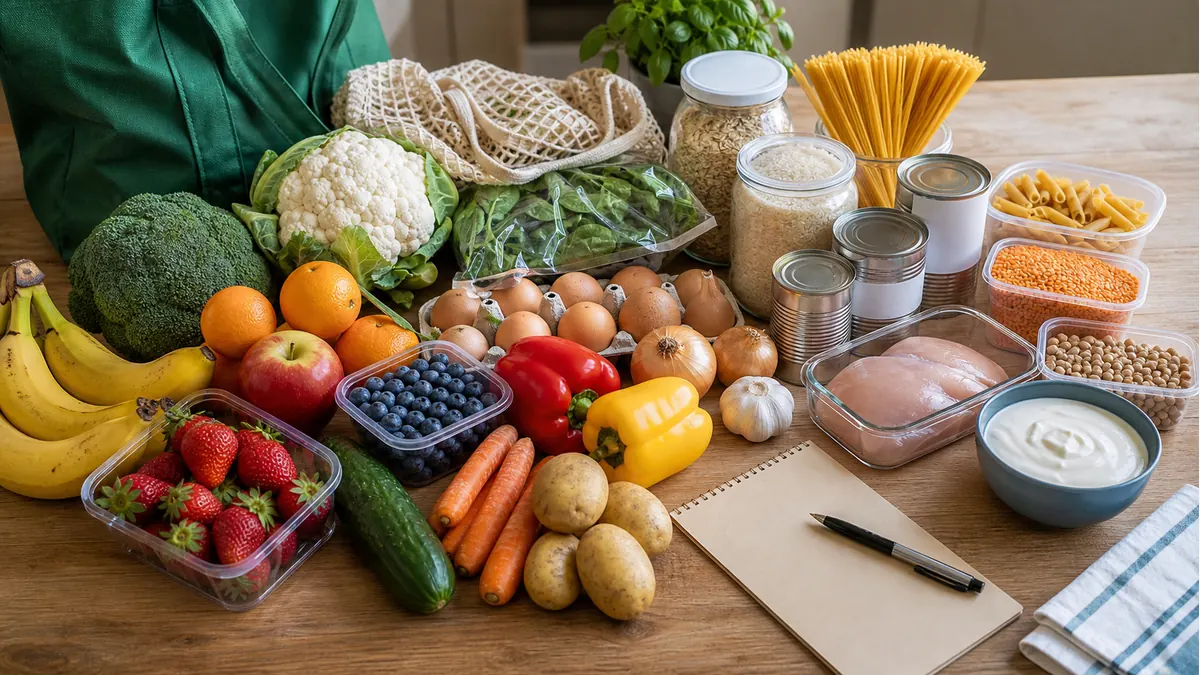
A single UK meal deal typically costs £3.50–5, and a takeaway meal is commonly £8–15. Five meal-deal-equivalent lunches a week alone (£17.50–25) can cost close to what an entire week of home-cooked meal prep costs, before counting dinners. See the dedicated comparison of meal prep versus meal deals for a fuller breakdown.
Create a Personal Weekly Cost Baseline
Use your last four normal food shops rather than an idealised menu. Remove household products, alcohol and meals for guests, then divide the remaining food spend by the number of people and days it covered. This produces a realistic baseline that already reflects your supermarket, appetite and local prices.
For the next planned week, price the complete basket before shopping and assign every perishable item to a meal. Record what remains at the end: food eaten, food frozen and food discarded. The cost of discarded food belongs in the weekly total, while an unopened staple or frozen portion can be carried into the following week rather than charged twice.
When you want to reduce the total, change one cost driver at a time. Swap one expensive protein, replace a branded staple, use more frozen vegetables or schedule a leftovers meal. Keeping the rest of the plan stable shows whether the change genuinely saves money without creating extra hunger, preparation or waste. Review the baseline monthly rather than expecting one fixed number to survive price and routine changes.
Frequently Asked Questions
How much does meal prep cost for one person per week in the UK?
Typically £20–45 for around 14 batch-cooked meals, depending on supermarket, protein target and how many meals you are covering, with discount supermarkets and standard (not high) protein targets sitting toward the lower end. A full seven days of every meal and snack, as on our meal plans, usually costs more.
Is meal prep cheaper at Aldi or Lidl than Tesco?
Generally yes for a comparable basket, though the exact difference depends on the specific items and any promotions running. See the cheapest UK supermarket comparison for a fuller breakdown.
Does higher protein always cost more?
Usually, since protein-dense foods tend to cost more per 100g than carbohydrate staples like rice, pasta or potatoes. Choosing cheaper protein sources like lentils, chicken thighs or tinned tuna narrows the gap meaningfully.
Want this as a full 7-day plan?
We'll email the matching plan, its shopping list and a printable copy.
We'll send: High-Protein Low Calorie Plan — 1,500 kcal
Want a new plan every week? Join the MealPrep+ waitlist.
Find Your UK Supermarket Meal Plan
Answer seven quick questions to find a realistic weekly plan for your supermarket, calorie target, budget and dietary preferences.
Find My Meal Plan →