How to Start the Gym: A Simple Beginner’s Guide
Your first gym visit does not need a perfect workout. It needs a few familiar steps: find your way around, learn how to use a small selection of equipment and finish knowing what you will do next time. You can build an effective routine without learning every machine or training every day.
Before Your First Visit
Ask whether your membership includes an induction and book it. An induction explains access, changing rooms, emergency procedures and equipment adjustments. Tell the instructor you are new and ask them to demonstrate the machines or movements you expect to use.
Bring comfortable clothes, suitable trainers, water and anything your gym requests, such as a towel or padlock. You do not need lifting accessories, pre-workout supplements or an expensive outfit to begin. Visiting at a quieter time can make it easier to ask questions and practise.
Set a small first-visit goal: learn the layout, try a few movements and note the settings. If you already have a health condition, symptoms or a reason you have been advised to limit exercise, get appropriate guidance about your situation before following a general routine.
The Gym’S Unwritten Rules Are Mostly Practical
Return weights to their rack and leave walkways clear. Follow the gym’s rules for cleaning equipment. Avoid filming people without permission, and step away from a machine during a long phone call. These habits make the space easier for everyone to share.
It is normal to ask, “Are you using this?” or “How many sets do you have left?” Wait until someone finishes their set before asking. You can choose another exercise if equipment is occupied; you do not have to stand beside a machine until it becomes free.
Do not move safety stops or remove another person’s weights without checking. If an adjustment is unclear, ask staff. Most beginners need a demonstration more than they need another online workout video.
Machines and Free Weights Both Belong
Machines guide part of the movement and can make the setup easier to repeat. Free weights, such as dumbbells, give you more freedom but also more to control. Neither option is a badge of seriousness. Choose equipment that lets you train comfortably and learn the task.
A seat or pad in the wrong position can make a machine awkward, so write down useful settings. With dumbbells, practise getting into and out of the starting position as well as the exercise itself. If a weight is too difficult to position safely, it is too heavy for that task today.
| Movement pattern | Possible equipment | First thing to learn |
|---|---|---|
| Squat or knee bend | Leg press, body-weight squat or goblet squat | A comfortable, repeatable range |
| Hip hinge | Light dumbbells or a cable | Moving at the hips with control |
| Push | Chest-press machine or dumbbells | Stable setup and a manageable load |
| Pull | Seated row or pulldown | Controlled movement without swinging |
| Single-leg or trunk work | Step, support or floor space | Balance, breathing and position |
Understand Sets, Repetitions and Rest
A repetition, often shortened to rep, is one complete movement. A set is a group of repetitions before a rest. “Two sets of eight” means eight repetitions, a rest, then another eight. Warm-up sets are lighter practice before the more challenging work sets.
For learning, you might try one or two work sets of a small number of exercises, using a manageable range such as eight to twelve repetitions. That is an example, not a rule every exercise must follow. Stop sooner if control changes or you feel pain.
Rest long enough to perform the next set well. Around one to three minutes is a useful practical starting range, with longer when a demanding set leaves you short of breath. You do not need to rush between exercises to make strength training count.
Choose your first weight by doing a light practice set. It should feel as though several more good repetitions would remain when you stop. If the last repetitions involve swinging, twisting or holding an awkward position, reduce the weight and ask for a technique check.
Build a Week You Can Repeat
NHS adult activity guidance includes strengthening all major muscle groups on at least two days each week, alongside aerobic activity. That is a general health framework, rather than a command to complete a demanding gym programme immediately.
Three non-consecutive gym visits can work well when each trains the whole body and the sessions fit your week. Monday, Wednesday and Friday leave gaps for recovery. Two visits may be more realistic initially. Start where you can be consistent and add a third when you recover comfortably.
An example week is: a short full-body session on Monday, an easy walk on Tuesday, another gym visit on Wednesday, a rest or enjoyable activity on Thursday and a third manageable gym visit on Friday. Keep the weekend flexible. This illustrates the schedule, rather than reproducing a complete workout plan.
If you miss Wednesday, continue at the next opportunity. Avoid squeezing two full sessions into Thursday to catch up. A routine should help you make decisions when life is busy, not turn a missed visit into a failure.
Want a simple plan to follow?
Full Body in Three provides three structured gym sessions, exercise alternatives and printable four-week tracking tables. It is a one-off £1.99 purchase.
Make Progress with One Small Change
Progressive overload means gradually increasing the challenge as your capacity improves. It can mean an extra controlled repetition, a small weight increase or doing the same work with a more consistent range. It does not mean lifting more every visit regardless of technique.
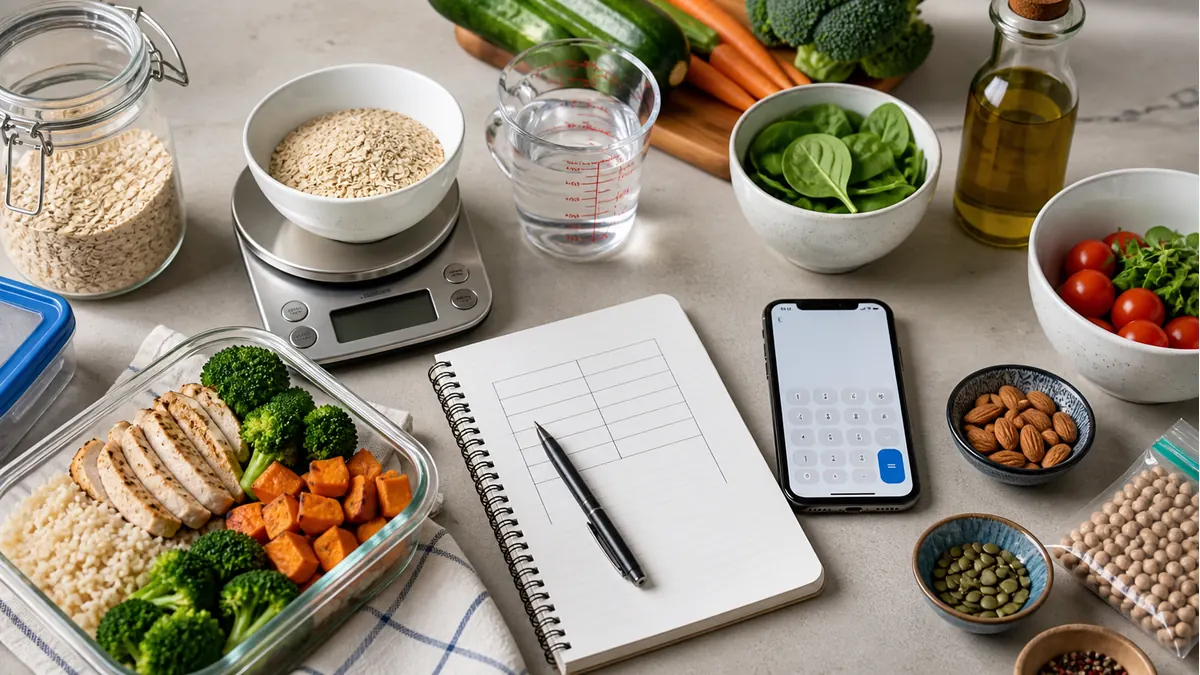
Write the exercise, machine setting, weight and repetitions in a notebook or phone note. Suppose a particular weight feels manageable for two sets of eight. Over several visits you might reach two sets of ten with the same control, then try the smallest weight increase and return to fewer repetitions.
Keep the main exercises familiar long enough to compare sessions. Constantly changing them makes it difficult to tell whether you are stronger or simply learning a different movement. A plateau can be a reason to review sleep, recovery and attendance before adding more work.
Let Food and Recovery Support the Habit
Arrange an ordinary meal around the visit so hunger does not make the evening harder. Include a protein source and other foods you enjoy; you do not need a specialist diet to earn your first workout. Preparing tomorrow’s lunch can be more useful than buying a supplement on the way home.
Expect some unfamiliar muscle sensations, but do not use soreness as the score for a good session. If you struggle with everyday movement afterwards, the next session can be smaller. Pain, dizziness or unusual symptoms call for stopping and appropriate advice.
Your first month’s useful measures are attendance, confidence with equipment and more repeatable technique. Appearance changes take time and differ between people. Make the next visit straightforward enough that you can keep coming back.
Frequently Asked Questions
Do I need a personal trainer to start?
A gym induction is a useful first step. Individual coaching may help you learn technique or work around specific needs, but you can begin by learning a few suitable movements with staff support.
What if I feel embarrassed using light weights?
Starting light lets you learn the setup and movement. The relevant comparison is whether you can control the exercise and gradually progress, rather than what someone nearby is lifting.
Want this as a full 7-day plan?
We'll email the matching plan, its shopping list and a printable copy.
We'll send: Gym Beginner Meal Plan — 1,800 kcal
Want a new plan every week? Join the MealPrep+ waitlist.
Find Your UK Supermarket Meal Plan
Answer seven quick questions to find a realistic weekly plan for your supermarket, calorie target, budget and dietary preferences.
Find My Meal Plan →