Low Calorie High Volume Foods UK
High-volume foods let you eat a plate that looks generous while keeping calories sensible. They are not magic, but they make a calorie deficit feel less like a constant negotiation.
To turn this into a weekly plan, take the meal plan quiz or browse all UK meal plans.
The Foods That Add Volume
The biggest wins are vegetables, potatoes, berries, melon, salad leaves, mushrooms, courgette, cauliflower rice, cabbage, soups, egg whites, 0% Greek yogurt, and lean protein served with plenty of veg.
Potatoes deserve a special mention. They are often treated like diet villains, but boiled or air-fried potatoes are filling, cheap, and easy to portion.
Use Volume Without Making Food Bland
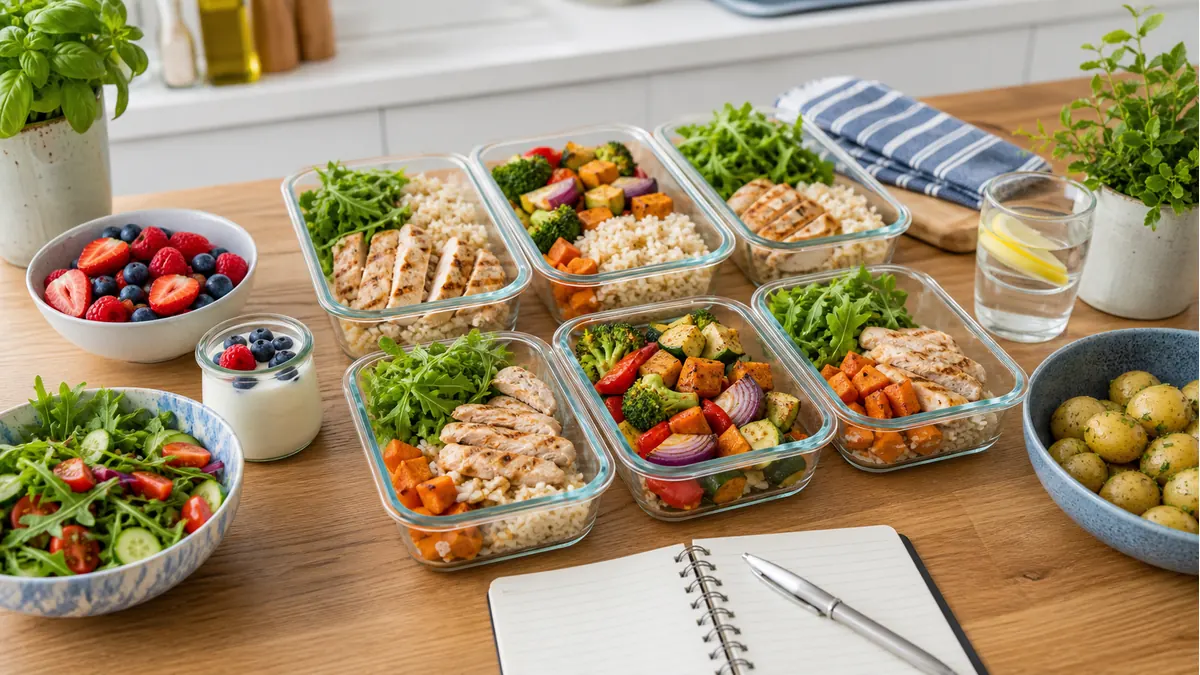
A huge bowl of plain lettuce is not a strategy. Add protein, salt, acidity, heat, and texture. A salad with chicken, potatoes, pickles, tomatoes, cucumber, and mustard yogurt dressing feels completely different from leaves in a tub.
Soups also work well when they include protein. Lentil soup, chicken vegetable soup, minestrone with beans, or chilli-style soup can be much more filling than a thin vegetable broth.
UK Shopping Shortcuts
Frozen vegetables are the easiest volume tool: broccoli, peas, spinach, mixed veg, cauliflower, peppers, and green beans. They keep for months and remove the pressure to use fresh produce immediately.
Bagged salad, microwave potatoes, tinned tomatoes, passata, frozen berries, and pre-chopped stir-fry veg are useful when time is tighter than motivation.
Why Volume Works: Energy Density
The mechanism is energy density - calories per gram - and it matters because people tend to eat a fairly consistent weight of food rather than a consistent number of calories. Lower the density and the same satisfying plate carries far less energy.
The numbers make the point better than the theory. Roughly, 100g of cucumber is about 15 kcal, 100g of boiled potato around 80, 100g of cooked chicken breast about 165, and 100g of cheddar about 415. Water and fibre are what dilute a food; fat is what concentrates it. That is the whole idea, and it is why soups and stews outperform their dry equivalents for fullness.
Where High-Volume Eating Stops Working
It is a tool for appetite, not a rule for eating. If hunger is not what is derailing your week - if the problem is evening snacking out of boredom, or drinking calories, or simply not tracking - then adding more vegetables solves nothing and can make meals a chore.
It also has a genuine downside if pushed hard: filling up on very low-density food can crowd out protein and fat, both of which you need. And it is actively unhelpful for anyone trying to eat more, which is why the advice reverses completely on a surplus. Use volume to make a deficit comfortable, not as a target in itself.
Frequently Asked Questions
What foods are high volume and low calorie?
Vegetables, berries, melon, potatoes, soups, salad leaves, mushrooms, courgette, cabbage, cauliflower, Greek yogurt, and lean protein meals with lots of veg.
Are potatoes good for weight loss?
They can be. Plain boiled, baked, or air-fried potatoes are filling and relatively low calorie compared with many processed carbohydrate foods.
Why do high-volume foods keep you full?
Because people tend to eat a fairly consistent weight of food rather than a set number of calories. Water and fibre lower a food’s energy density, so the same size plate carries fewer calories - roughly 15 kcal per 100g for cucumber against 415 for cheddar.
Can you overdo high-volume eating?
Yes. Filling up on very low-calorie food can crowd out protein and fat, and it does nothing if your problem is snacking or drinks rather than hunger. It is a tool for making a deficit comfortable, not a goal.
Want this as a full 7-day plan?
We'll email the matching plan, its shopping list and a printable copy.
We'll send: Weight Loss Meal Plan — 1,500 kcal
Want a new plan every week? Join the MealPrep+ waitlist.
Find Your UK Supermarket Meal Plan
Answer seven quick questions to find a realistic weekly plan for your supermarket, calorie target, budget and dietary preferences.
Find My Meal Plan →