How to Read a UK Food Label
Almost everything people get wrong about food labels comes from one thing: the number on the front was chosen by the manufacturer, and the number on the back was not. Learning to ignore the first and read the second takes about ten minutes and makes every plan on this site easier to follow.
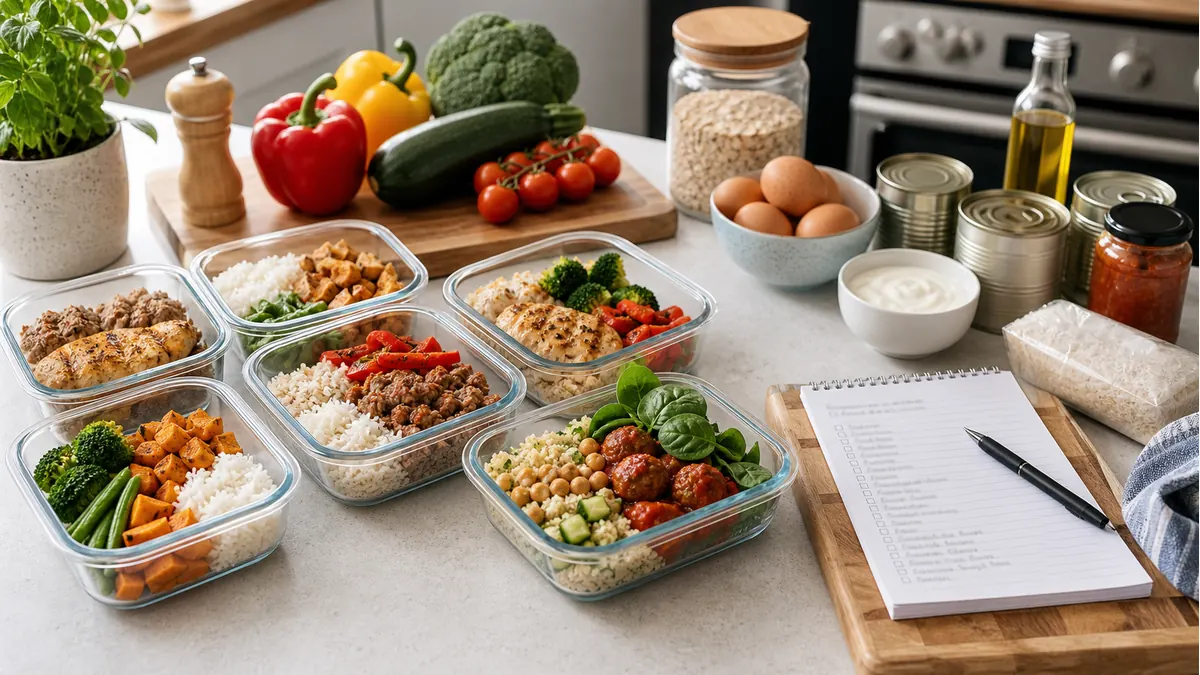
Every plan on the site states its own calories, protein and cost - browse them in the plan library, or use the quiz to get matched to one.
Per 100g Is the Only Honest Column
UK packaging must carry a back-of-pack table giving energy, fat, saturates, carbohydrate, sugars, protein and salt per 100g or 100ml. That standardisation is the whole point: it is the only way to compare two products directly, because it does not depend on anyone agreeing what a portion is.
The per-portion column beside it is optional and the portion is the manufacturer's choice. A "portion" of cereal is frequently 30g, which is a modest bowl by anyone's standards; crisps and biscuits are often quoted per half a bag or per two biscuits. None of that is dishonest, but it means two products can look similar per portion and differ substantially per 100g.
The practical habit: compare on per 100g, then multiply by what you will actually eat. If that sounds laborious, it is the calorie-dense foods where it matters - oils, cheese, nuts, granola, sauces - and barely worth doing for vegetables.
What %Ri Actually Refers To
The percentages on the front of a pack are Reference Intakes, and they are calculated against a notional average adult on 2,000 kcal a day with fixed values for fat, saturates, sugars and salt. They are a labelling convention, not a recommendation for you.
So a product showing 25% RI for energy is telling you it contains 500 kcal, and nothing about whether that is a lot for your day. If you are eating 1,500 kcal it is a third of it; at 3,000 it is a sixth. Read the gram and calorie figures and let the percentage go.
Traffic light colours are voluntary in the UK and are usually assigned per 100g, which is why a food eaten in small amounts can show red for fat and still be irrelevant to your week - olive oil being the obvious case.
The Claims on the Front Are Legally Defined
This is the useful part almost nobody knows: nutrition claims in the UK are not marketing language, they are regulated thresholds. "Source of protein" means at least 12% of the food's energy comes from protein. "High in protein" means at least 20%. That is a proportion of energy, not an absolute amount, which is why a food can be "high protein" and still contain very little protein per serving if the serving is small.
"Low fat" means 3g or less per 100g for a solid food, and 1.5g per 100ml for a liquid. "Fat-free" means no more than 0.5g per 100g. "Low sugars" is 5g or less per 100g; "sugar-free" is 0.5g or less. "Source of fibre" is 3g per 100g and "high fibre" is 6g.
"No added sugar" is the one to read carefully, because it means exactly what it says and nothing more: no sugars were added. A fruit juice or a dried fruit bar can carry it while containing a great deal of naturally occurring sugar. It is not a synonym for low sugar, and the two claims have entirely separate legal tests.
Where Labels Matter for Meal Prep Specifically
Two places. The first is the raw-versus-cooked question: pack figures for rice, pasta and pulses are almost always given for the dry product, and these roughly double to triple in weight once cooked. Weighing 100g of cooked rice against a 100g dry label is a difference of well over 200 calories, and it is the most common reason a carefully followed plan does not add up.
The second is meat, where the label figure is usually raw and cooking removes water. A 500g pack of chicken breast does not produce 500g of cooked chicken, so if a plan gives cooked weights and you weigh raw - or the reverse - the numbers drift. Pick one and stay with it; the plans on this site state which they mean.
Frequently Asked Questions
Should I use the per 100g or per portion column?
Per 100g. It is the standardised figure and the only way to compare two products, because portion sizes are chosen by the manufacturer and are often smaller than anyone actually eats.
What does %RI mean on UK food packaging?
Reference Intake - the percentage of a notional 2,000 kcal adult diet. It is a labelling convention rather than advice for you, so read the calorie and gram figures instead.
What does "high in protein" legally mean?
That at least 20% of the food's energy comes from protein. "Source of protein" is 12%. Both are proportions of energy, so a small serving of a "high protein" food can still contain little protein.
Is "no added sugar" the same as low sugar?
No. It only means no sugars were added, so a product can carry it while being high in naturally occurring sugar. "Low sugars" is a separate claim meaning 5g or less per 100g.
Want this as a full 7-day plan?
We'll email the matching plan, its shopping list and a printable copy.
We'll send: High-Protein Low Calorie Plan — 1,500 kcal
Want a new plan every week? Join the MealPrep+ waitlist.
Find Your UK Supermarket Meal Plan
Answer seven quick questions to find a realistic weekly plan for your supermarket, calorie target, budget and dietary preferences.
Find My Meal Plan →