
How to Swap Meals Without Breaking the Plan
No plan survives a week untouched. Something is out of stock, something turns out to be unappealing, and something gets eaten on the wrong day. Swapping well is a skill, and the difference between a plan that bends and one that gets abandoned is usually knowing which part of a meal is load-bearing.
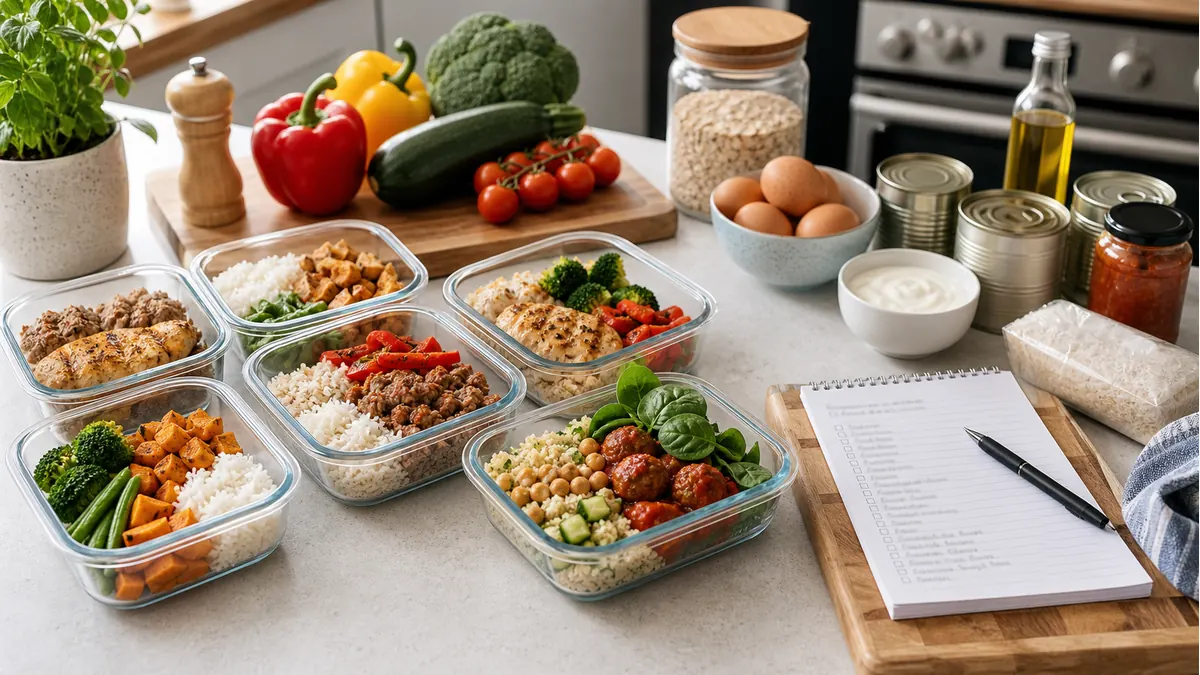
Every plan on the site states its own calories, protein and cost - browse them in the plan library, or use the quiz to get matched to one.
The Protein Is the Load-Bearing Part
Swap chicken for turkey, white fish for another white fish, or beef mince for turkey mince and the plan barely notices - the calories move a little, the protein stays, and everything the meal was doing still happens. Those are free swaps and you should make them without hesitation when a shelf is empty.
Swapping a protein for a carbohydrate is not a swap, it is a different meal. Replacing the chicken in a rice bowl with more rice keeps the calories roughly level and removes the reason the meal kept you full until the evening, which is the failure people then blame on the plan rather than the substitution.
What Actually Moves the Numbers
Cooking fat and sauces, by a distance. A meal cooked in a tablespoon of oil rather than a spray is about 120 kcal different, and a creamy sauce instead of a tomato one can be more. If you change nothing else in a week, changing how much fat goes in the pan is the swap that shows up on the scales.
Starches are more forgiving than people expect, as long as you match cooked weight to cooked weight. Rice, pasta, couscous and potato land in a similar range per cooked gram, so the swap is close to neutral - the trap is comparing a dry weight to a cooked one, which triples the figure.
Vegetables are effectively free. Swap them for whatever is in the fridge, in whatever quantity, and stop thinking about it.
Swap Within the Shopping List Where You Can
The best swap uses something you have already bought. If Thursday's meal is unappealing and Tuesday's was good, cook Tuesday's again - the ingredients are in, nothing is wasted and the week still works. Repeating a meal you like is a better outcome than following a plan you have stopped enjoying.
Buying a new ingredient to rescue one meal is usually the expensive answer, because it introduces a part-used pack and the waste that follows. Save that for when the alternative is not eating.
When a Swap Means the Plan Is Wrong
If you are swapping three or four meals a week, the plan is not fitting you and no amount of substitution will fix that. That is a signal to change the plan rather than keep patching it - usually to a different prep style, a different calorie target, or a plan built around foods you actually reach for.
The same applies if every swap is in the same direction. Consistently replacing the fish, or always adding more carbohydrate, is information about what you will genuinely eat, and it is worth acting on rather than resisting week after week.
Frequently Asked Questions
Can I swap meals in a meal plan?
Yes - match the protein first and keep it about the same weight, since that is the part doing the work. Vegetable swaps are free and starch swaps are close to neutral if you match cooked weight to cooked weight.
What swap changes the calories most?
Cooking fat and sauces. A tablespoon of oil instead of a spray is around 120 kcal, and a creamy sauce in place of a tomato one can be more than that.
What if I want to swap most of the meals?
Then the plan is not the right one. Swapping three or four meals a week is a sign to change plan rather than keep patching it - and the direction of your swaps tells you what to change to.
Want this as a full 7-day plan?
We'll email the matching plan, its shopping list and a printable copy.
We'll send: High-Protein Low Calorie Plan — 1,500 kcal
Want a new plan every week? Join the MealPrep+ waitlist.
Find Your UK Supermarket Meal Plan
Answer seven quick questions to find a realistic weekly plan for your supermarket, calorie target, budget and dietary preferences.
Find My Meal Plan →