Weekly cost uses UK-wide average ingredient prices, not Generic UK supermarket checkout prices. A first shop of whole packs may cost more.
Daily average across the 7 days
3,000 kcal143g protein386g carbs99g fat66g fibre
Individual days vary around these figures.
About the cost estimate
Adjust Household PortionsCurrently 1 person · cooking 1 portion
Your 7-Day Meal Plan
Monday
3,003 kcal per person155g protein · 478g carbs per person
Breakfast614 kcal · 18g protein · 91g carbs · 4 hr 5 min (5 min prep)
Chia and Oat Overnight Pot with Berries
Made with rolled oats, chia seeds, oat milk.
Recipe
Ingredients
90g rolled oats
3 tsp chia seeds
300ml oat milk
125g frozen mixed berries
1½ tsp maple syrup
Allergens in this meal: Cereals containing gluten. Worked out from generic ingredient names — always read the product label.
Method
Stir rolled oats, chia seeds and oat milk together in a lidded jar or container.
Stir well, cover and chill for at least 4 hours or overnight.
Stir again before eating, then add frozen mixed berries and maple syrup. Loosen with a splash of oat milk if needed.
Lunch911 kcal · 50g protein · 158g carbs · 15 min
Red Lentil and Vegetable Soup with Wholemeal Roll
Made with red lentils, carrot, onion.
Recipe
Ingredients
150g red lentils
2 carrots
1½ onions
3 celery stalks
2 wholemeal roll
725ml vegetable stock
Allergens in this meal: Celery, Cereals containing gluten. Check the label for: Sesame, Soybeans. Worked out from generic ingredient names — always read the product label.
Method
Peel and chop carrots, onions and celery into even pieces.
Heat a large non-stick pan over medium heat and soften carrots, onions and celery for 5-7 minutes, adding a splash of water if the pan starts to stick.
Stir in vegetable stock, then add red lentils and simmer gently until tender and thickened.
Taste, season and serve with the wholemeal roll on the side.
Dinner836 kcal · 40g protein · 162g carbs · 25 min
Chickpea and Sweet Potato Stew
Made with tinned chickpeas, sweet potato, tinned tomatoes.
Recipe
Ingredients
1¼ standard tins of chickpeas, drained
2 medium sweet potatoes
1½ standard tins of tomatoes
5 generous handfuls baby spinach (about 150g)
1½ tsp cumin
1½ tsp paprika
Method
Peel and chop sweet potatoes into even pieces. Drain and rinse chickpeas.
Heat a large non-stick pan over medium heat and soften sweet potatoes for 5-7 minutes, adding a splash of water if the pan starts to stick.
Stir in cumin and paprika, then add chickpeas, tomatoes and baby spinach and simmer gently until tender and thickened.
Taste, season and portion for serving.
Snack307 kcal · 5g protein · 34g carbs · 1 min
Apple with Walnuts
Made with apple, walnuts.
Recipe
Ingredients
2 apples
30g walnuts
Allergens in this meal: Tree nuts. Worked out from generic ingredient names — always read the product label.
Method
Slice or portion apples as needed.
Combine apples and walnuts in a bowl or lidded container.
Snack138 kcal · 24g protein · 9g carbs · 1 min
Skyr High-Protein Yogurt
Made with skyr.
Recipe
Ingredients
225g skyr
Allergens in this meal: Milk. Worked out from generic ingredient names — always read the product label.
Method
Put skyr in a bowl.
Stir gently and serve.
Eat straight away, or cover and chill for later the same day.
Snack197 kcal · 18g protein · 24g carbs · 5 min
Tzatziki with Vegetable Dippers
Made with low-fat greek yogurt, cucumber, garlic clove.
Recipe
Ingredients
150g low-fat Greek yogurt
¼ cucumber, grated
1 garlic clove
2 carrots
3 celery sticks
1½ tsp dill
Allergens in this meal: Celery, Milk. Worked out from generic ingredient names — always read the product label.
Method
Squeeze the grated cucumber in a clean tea towel to remove the excess water.
Crush or finely grate the garlic, then stir it into the low-fat Greek yogurt with the cucumber and dill. Season to taste.
Cut the carrot and celery sticks into batons and serve them with the tzatziki for dipping.
Estimated cost: £60–105/week for 1 person: the amounts the recipes use, at UK-wide average prices. A first shop of whole packs costs more. Calories and macros remain per person, while shopping quantities are scaled for the household.
0 of 88 items tickedSaved on this device
Protein
Carbs & Grains
Vegetables
Plant-Based Milks & Alternatives
Dairy & alternatives
Fruit
Herbs & Spices
Condiments & Oils
Tins & Jars
Nuts, seeds & other
Muscle building, at a higher daily calorie target. This 7-day plan targets 3,000 kcal/day and averages 143g of protein, built from ingredients stocked at any major UK supermarket for an estimated £60–105/week. The meal selection favours vegetarian protein sources that fit the plan's calorie and protein targets. The first day's lunch and dinner are Red Lentil and Vegetable Soup with Wholemeal Roll and Chickpea and Sweet Potato Stew.
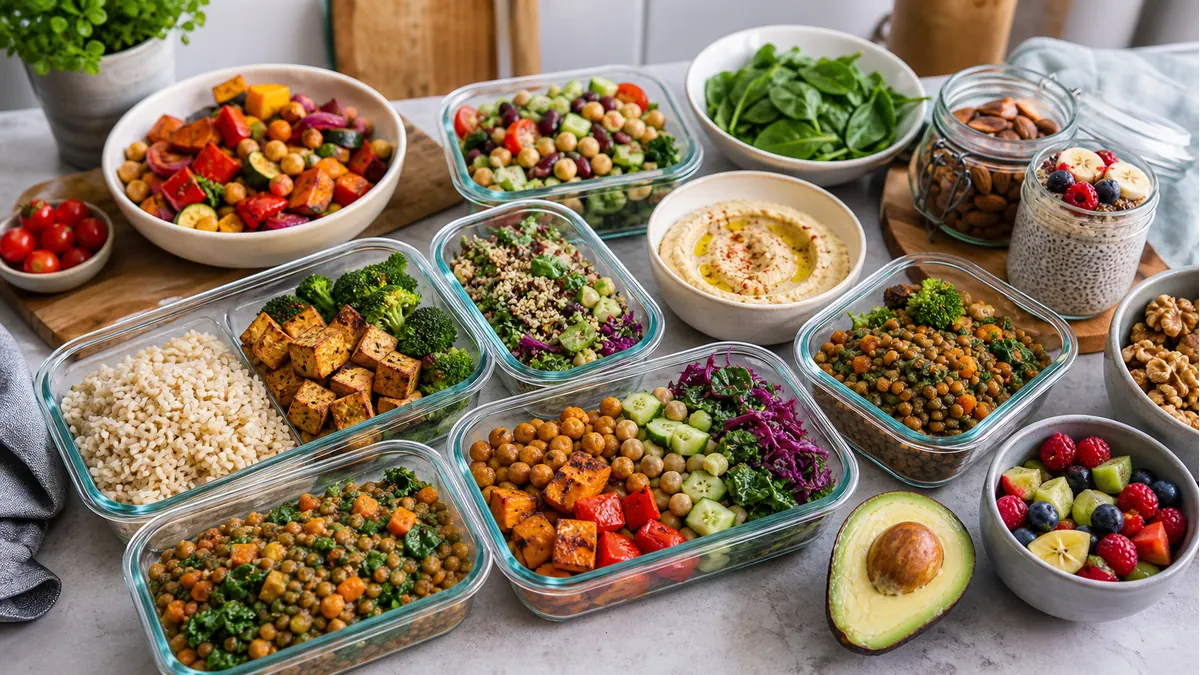
This plan has about 17 prep-friendly meals. Start with 9 main containers, 4 small sauce or snack tubs, and 2 freezer tubs.
Use 2 five-container glass packs to provide at least 9 main meal spaces, then add the separate small tubs shown above.
RecommendedMid-range glass setup
Best for regular weekday lunches, reheating at work, curry, chilli, pasta, and repeat washing.
Material
Glass
Price and availability
Check Amazon UK before buying
This plan includes saucy or reheated meals, so choose containers with secure, leak-resistant lids. If using plastic, check that it is suitable for reheating and follow the product instructions.
As an Amazon Associate I earn from qualifying purchases. Product prices and availability can change on Amazon UK.
The One Tool This Plan Assumes
The protein and calorie figures on this plan are calculated from weighed portions. Estimating by eye is where most high-protein plans quietly drift, so a set of digital scales is the difference between following this plan and approximating it. Any scale works — this is simply a cheap, accurate one.
As an Amazon Associate I earn from qualifying purchases. Product prices and availability can change on Amazon UK.
Kitchen scaleBudget
Salter Arc Digital Kitchen Scale
A slim, add-and-weigh digital scale with a 3kg capacity, useful for portioning rice, protein and vegetables precisely rather than guessing by eye.
Best forWeighing portions accurately for calorie or macro tracking
Good to knowNo liquid measurement mode; for sauces and liquids, a scale with an Aquatronic function is more useful.
Built from ingredients stocked by every major UK supermarket, using average UK pricing rather than one retailer.
Value rangeOwn-brand equivalents at any major retailer
What Generic UK supermarket is good for here
Ingredients are chosen from staples that most UK supermarkets carry, so the plan should work wherever you shop, though ranges still vary by store.
Easy to swap to a specific retailer later without changing the meals.
Costs reflect a mid-market average rather than the cheapest or priciest store.
Worth knowing before you shop
Shopping entirely at a discounter will usually come in below the estimate; a premium store above it.
No loyalty-scheme pricing is assumed.
Retailer details checked 2026-07-20. Ranges and loyalty schemes change — the weekly cost estimate above prices this plan's ingredients at UK-wide average prices, not live prices at this store.
Swaps & Suggestions
💰 Make it cheaper
Compare own-brand versions of the ingredients on this shopping list at your usual supermarket
Compare the price per 100g or 100ml when choosing pack sizes for this week’s quantities
Plan another use for any unused pack contents before buying extra ingredients
Compare dried pulses with the tinned pulses on this list if you have time to soak and cook them
Compare fresh and frozen berries for the berry meals in this plan
💪 Increase protein
Add extra egg whites (3–4) to a breakfast instead of whole eggs — protein without the extra fat
Use 0% fat Greek yogurt or quark instead of standard yogurt for the same volume, far more protein
Add a couple of eggs or a portion of cottage cheese as a whole-food protein top-up
Frequently Asked Questions
How much does this muscle gain plan cost per week?
This plan is designed for a generic UK supermarket and is estimated at £60–105 per week for one person: the ingredients its recipes use, priced at UK-wide average prices rather than as a live store quote. Buying whole packs of staples such as oil and spices makes a first shop cost more. Buying in bulk and choosing own-brand items can reduce this further.
How much protein does this plan provide per day?
This plan averages 143g of protein per day across the week, based on the meals actually selected. For comparison, the UK reference nutrient intake for adults is 0.75g of protein per kg of body weight a day (about 53g at 70kg); people who train regularly often aim higher.
How is this different from a generic muscle gain plan?
Plenty of muscle gain plans share the same 3,000 kcal target — the difference here is that the meal selection is biased toward lower-fat protein sources rather than just hitting a protein number however it can.
Can I print this muscle gain meal plan or save it as a PDF?
Yes. Use the export / print PDF button on the plan page. The printable version summarises all 7 days at 3,000 kcal/day, the generic UK supermarket shopping list, and your chosen household portion sizes.
Is this plan suitable for meal prep?
Most recipes in this plan scale well and reheat easily. Soups, stews, and grain dishes are ideal for making in larger batches to save time midweek.
Is this plan suitable for vegetarian eaters?
Yes. Every meal in this plan is vegetarian, using ingredients readily available from a generic UK supermarket.
Recipes in this plan
Every meal in this week has its own page with the full ingredient list, method, cost and allergens.