3000 vs 3500 Calorie Meal Plan UK
A 3000 calorie plan and a 3500 calorie plan are both high-calorie targets, but they are not interchangeable. The right choice depends on your current weight trend, training load, appetite and how consistently you can follow the plan.
To turn this into a weekly plan, take the meal plan quiz or browse all UK meal plans.
Quick Comparison
Start with 3000 calories if you are moving up from a normal maintenance intake or trying to gain slowly. Use 3500 calories when you already know 3000 is not enough, or your activity level is genuinely high.
| Target | Best for | Practical note |
|---|---|---|
| 3000 kcal | Moderate bulking, active jobs, endurance training | Usually easier to follow without feeling stuffed |
| 3500 kcal | Hard gainers, heavy training, large active users | Needs planned snacks and liquid calories may help |
How to Make Higher Calories Realistic
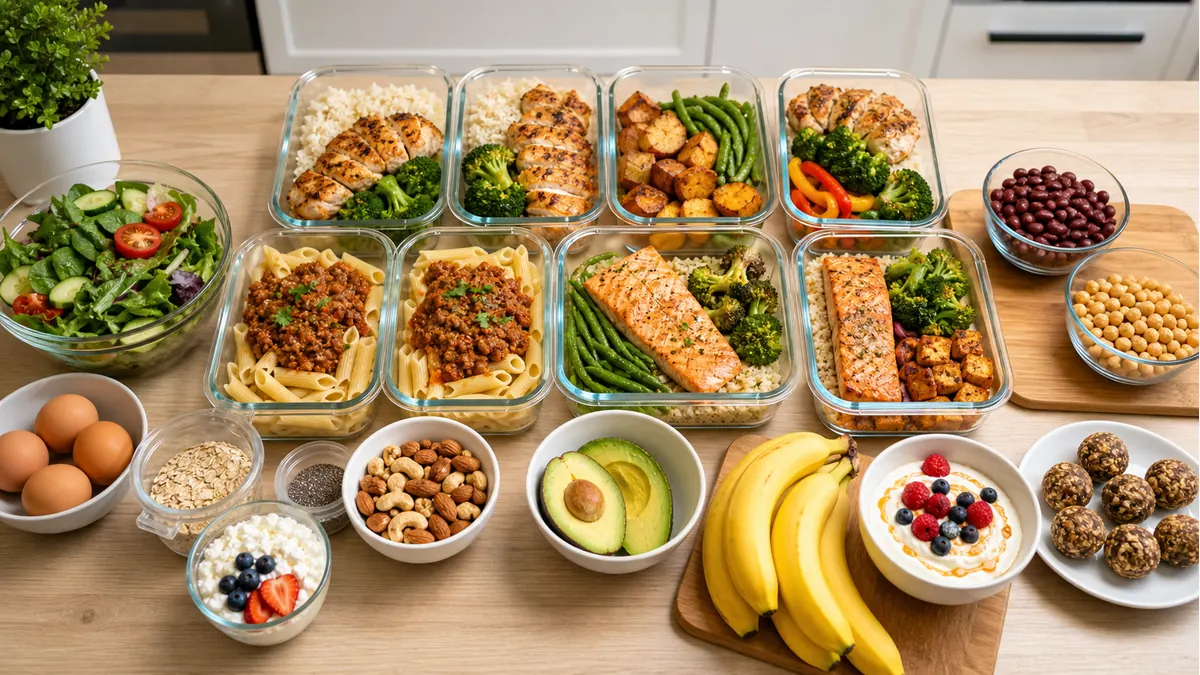
Do not rely on simply multiplying a normal plan. A better high-calorie day uses breakfast, lunch, dinner, two or three snacks, and calorie-dense additions such as oats, rice, pasta, potatoes, olive oil, peanut butter, yogurt, milk and nuts.
Keep protein steady, but do not turn every meal into a protein challenge. Carbs are usually the easier way to make heavy training weeks feel better.
Which Plan Should You Try First?
If your weight is stable and you want a controlled surplus, try 3000 calories first for two to three weeks and watch the trend. If weight still will not move and adherence is good, move up to 3500 calories.
What 500 Calories Looks Like on a Plate
Abstractly it sounds like a lot. Concretely it is around 100g of oats with 300ml of whole milk, or about four tablespoons of olive oil spread over the day, or a large handful of nuts and a banana. It is one addition to a day rather than a redesign of it, which is why moving between the two targets is less dramatic than the numbers suggest.
That also explains why the step up is easy to make by accident. If you are not weighing the dense additions - oil, nut butter, cheese, granola - the difference between a 3,000 and a 3,500 kcal day can be a few unmeasured spoonfuls spread across the day.
The Measurement Problem Behind Most of These Decisions
People are consistently poor at estimating their own intake, and studies of self-reported eating have long found substantial under-reporting - often in the region of 20 to 30 per cent. That cuts both ways at high targets: someone convinced they are eating 3,000 may be nearer 2,400, which is why the weight has not moved.
The practical consequence is to distrust the plan number before distrusting the target. Weigh the dense items for a week, log honestly including the days that go badly, and only then decide whether 3,000 has genuinely failed. Moving to 3,500 on top of a 500 calorie logging gap simply makes the gap harder to see.
Frequently Asked Questions
Is 3500 calories too much?
It can be too much for many people. It is mainly useful for high energy needs, heavy training or deliberate weight gain when lower targets are not enough.
Can I print a 3000 or 3500 calorie plan?
Yes. Open a matching plan and use the export or print PDF section to save the full week and shopping list.
What does the extra 500 calories actually look like?
Roughly 100g of oats with 300ml of whole milk, about four tablespoons of olive oil across the day, or a large handful of nuts with a banana. One addition rather than a redesigned day.
How do I know if 3,000 is really not enough?
Check the logging before changing the target. Under-reporting of 20 to 30 per cent is common, so weigh the dense items for a week and include the days that go badly. Many people who think 3,000 has failed were not eating 3,000.
Want this as a full 7-day plan?
We'll email the matching plan, its shopping list and a printable copy.
We'll send: 3,000 Calorie Muscle Gain Meal Plan — 3,000 kcal
Want a new plan every week? Join the MealPrep+ waitlist.
Find Your UK Supermarket Meal Plan
Answer seven quick questions to find a realistic weekly plan for your supermarket, calorie target, budget and dietary preferences.
Find My Meal Plan →