Best Fibre Foods for Weight Loss UK
Fibre is not glamorous, but it is one of the main reasons some meals keep you full for hours while others disappear in twenty minutes. UK supermarkets make high-fibre eating easy if you know what to buy.
To turn this into a weekly plan, take the meal plan quiz or browse all UK meal plans.
Why Fibre Helps
Fibre slows digestion, adds bulk to meals, supports gut health, and often comes packaged with useful nutrients. It is one of the reasons oats, beans, lentils, vegetables, fruit, and wholegrains work so well in fat-loss meals.
Increase fibre gradually and drink enough fluids. Going from low fibre to lentils, beans, bran cereal, and huge salads overnight is a bold way to annoy your stomach.
Best UK Fibre Staples
Oats, Weetabix-style cereal, wholemeal bread, potatoes with skins, beans, lentils, chickpeas, peas, berries, apples, pears, carrots, broccoli, cabbage, and wholewheat pasta are all easy to find.
The best meal prep approach is to add one fibre source to every meal rather than trying to make one heroic high-fibre dinner.
- Breakfast: oats with berries or high-fibre cereal with yogurt.
- Lunch: beans, lentils, chickpeas, wholemeal wraps, or potatoes.
- Dinner: vegetables plus wholegrain carbs or pulses.
- Snacks: fruit, carrots, hummus, popcorn, or yogurt with berries.
Fibre Plus Protein
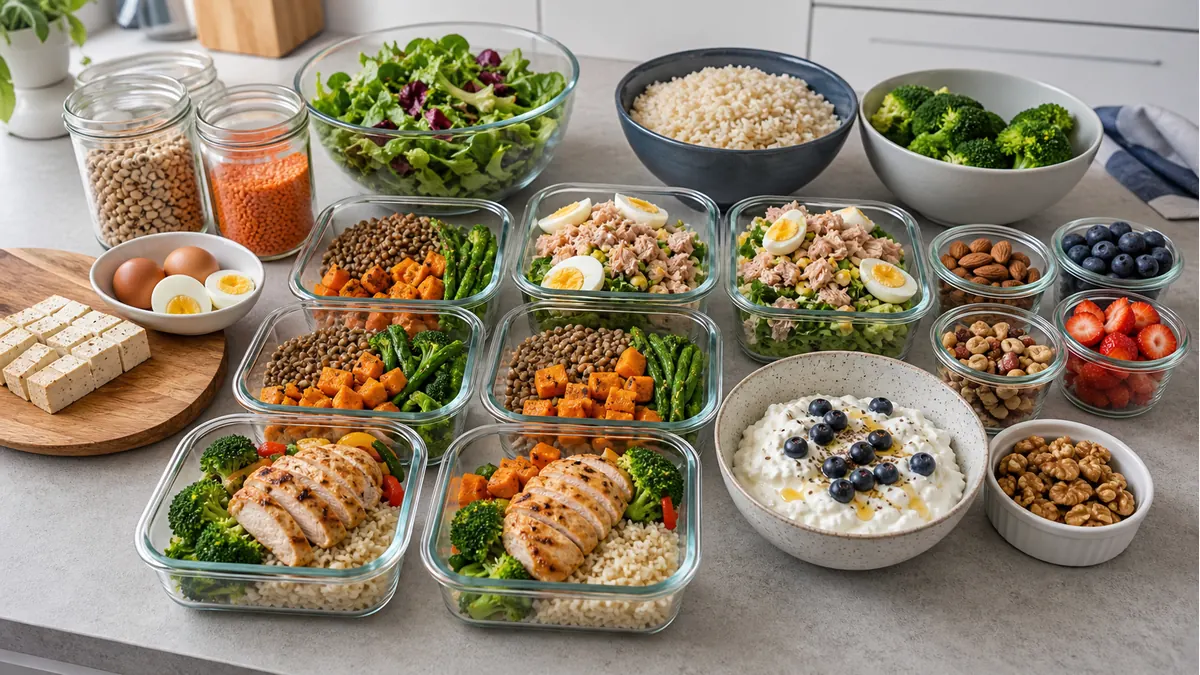
Fibre and protein together are especially useful for appetite. Lentil chilli with Greek yogurt, tuna jacket potato with salad, chicken and bean soup, or tofu with vegetables and rice all cover both.
This combination is also budget-friendly. Pulses, oats, frozen vegetables, and potatoes are among the cheapest foods in UK supermarkets.
How Much Fibre, and Where Most People Actually Sit
UK government advice is 30g of fibre a day for adults. Average intake is well short of that - most surveys put it around 20g - so the realistic goal for most people is closing a ten gram gap rather than overhauling the diet.
Ten grams is smaller than it sounds. Half a standard tin of baked beans is around 7g on its own; a large jacket potato eaten with the skin is roughly 5g; two Weetabix about 4g; 80g of peas around 4g. Add one deliberate source to each meal and the total arrives without anyone eating a bowl of bran.
Supplements, and Why Food Usually Wins
Fibre supplements do something - psyllium in particular has reasonable evidence behind it for regularity - but they supply one type of fibre in isolation. Food supplies a mixture, along with the protein, vitamins and minerals that come with beans, oats, fruit and vegetables, and it is the whole package that makes a meal filling rather than the fibre alone.
If you do increase intake, do it gradually and drink more water. Going from 20g to 35g in a day is a reliable way to feel bloated and conclude that fibre does not agree with you, when the problem was the speed rather than the food.
Frequently Asked Questions
Which foods are highest in fibre?
Beans, lentils, chickpeas, oats, berries, wholegrains, vegetables, potatoes with skins, apples, pears, and high-fibre breakfast cereals are good options.
Can fibre help weight loss?
It can help appetite and meal satisfaction, which makes a calorie deficit easier to maintain. Calories still matter.
How much fibre should I eat a day?
UK advice is 30g a day for adults, and average intake is around 20g. Closing that gap is roughly one deliberate source per meal - half a tin of baked beans alone is about 7g.
Are fibre supplements worth taking?
Food usually wins, because it brings a mixture of fibre types plus protein and micronutrients. Supplements like psyllium have their uses, but they do not make a meal more filling the way a bowl of lentils does.
Want this as a full 7-day plan?
We'll email the matching plan, its shopping list and a printable copy.
We'll send: Weight Loss Meal Plan — 1,500 kcal
Want a new plan every week? Join the MealPrep+ waitlist.
Find Your UK Supermarket Meal Plan
Answer seven quick questions to find a realistic weekly plan for your supermarket, calorie target, budget and dietary preferences.
Find My Meal Plan →