Protein Meal Prep Without Powder UK
Protein powder is convenient, but it is not required. You can build a high-protein week from ordinary UK supermarket foods if each meal has a clear protein anchor.
To turn this into a weekly plan, take the meal plan quiz or browse all UK meal plans.
Protein Anchors to Use
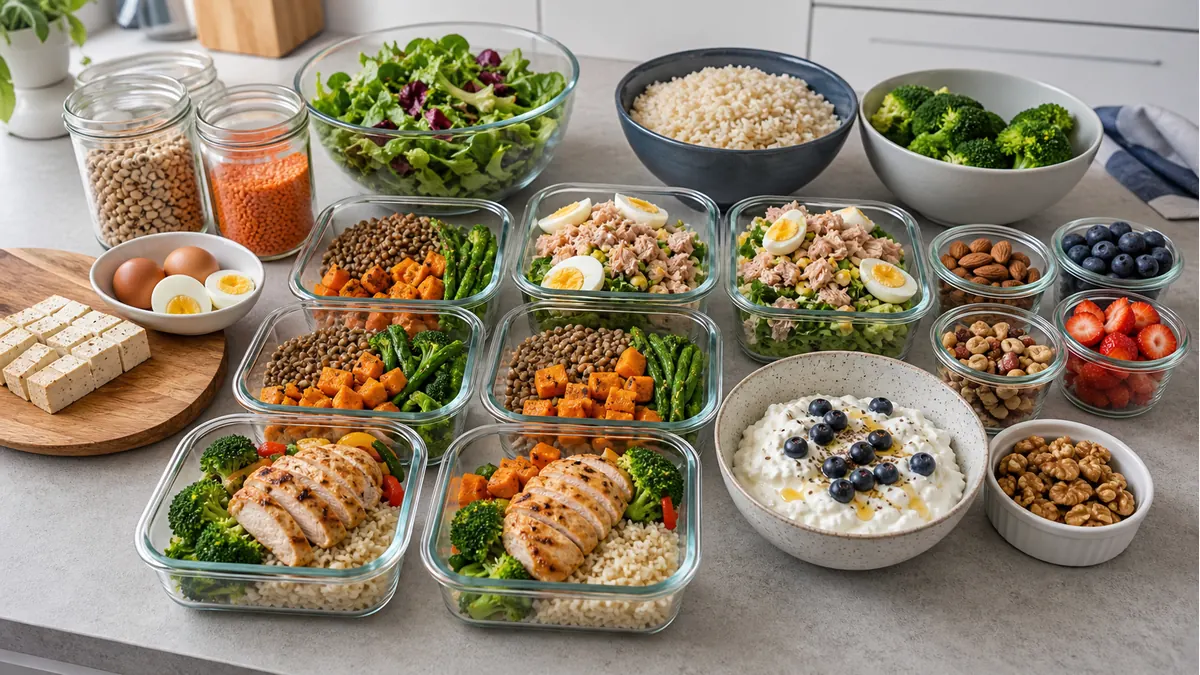
Chicken, turkey, lean mince, eggs, tinned tuna, salmon, prawns, Greek yogurt, skyr, cottage cheese, tofu, lentils, beans, chickpeas, and meat-free mince are all useful.
Most people struggle because breakfast and snacks are low protein. Fix those first. Yogurt, eggs, cottage cheese, tuna, tofu, and leftovers are more useful than another low-protein cereal bar.
A Powder-Free High-Protein Day
Breakfast could be Greek yogurt with oats and berries. Lunch could be chicken pasta salad. Dinner could be turkey chilli, tofu curry, salmon potatoes, or lentil bolognese with cottage cheese on the side.
Snacks can be boiled eggs, yogurt, cottage cheese, edamame, tuna on crackers, or a small leftover portion. It is not fancy; it just works.
When Powder Is Still Useful
Protein powder can be helpful if you are busy, have a high target, or need a cheap shelf-stable option. But it should solve a real problem rather than become a substitute for learning basic meals.
If you do use it, treat it like an ingredient in oats, yogurt, smoothies, or pancakes rather than a requirement for being healthy.
How Much You Actually Need
Commonly cited guidance for people training for muscle or protecting it in a deficit is roughly 1.6 to 2.2g per kilogram of bodyweight a day, with little evidence of benefit beyond that. For an 80kg person that is about 130 to 175g. The UK reference intake for a sedentary adult is far lower, around 0.75g per kilogram, which is a minimum to avoid deficiency rather than a target to train on.
Put like that, the number is reachable without powder for most people, but not by accident. It works out at roughly 30 to 40g per meal across three meals plus a snack, which is a chicken breast, a tin of tuna, a large pot of Greek yoghurt, or 200g of tofu with a side of beans.
Spreading It Out, and How Much That Matters
Research on protein distribution suggests muscle protein synthesis responds better to protein spread across the day than to the same total eaten mostly in the evening, with something in the region of 20 to 40g per meal often cited as the useful range. The effect is real but modest, and it should not be treated as a rule that a meal below the threshold is wasted.
The practical version is simpler: breakfast and snacks are where most people lose 40 or 50g without noticing, so fixing those closes the gap faster than adding more chicken to a dinner that already has plenty. Swap the cereal bar for yoghurt or eggs and the total moves on its own.
Frequently Asked Questions
Can I hit protein goals without protein powder?
Yes. Use protein at every meal from chicken, eggs, fish, yogurt, cottage cheese, tofu, lentils, beans, and meat-free options.
What is the easiest powder-free breakfast?
Greek yogurt with oats and berries, eggs on toast, cottage cheese toast, or overnight oats made with yogurt are simple options.
How much protein do I need without powder?
Around 1.6 to 2.2g per kilogram of bodyweight daily if you train, which is roughly 30 to 40g per meal for most people. That is a tin of tuna, a chicken breast, a large Greek yoghurt or 200g of tofu - all reachable from ordinary food.
Does it matter when I eat protein?
A little. Spreading it across meals appears to work slightly better than loading it into dinner, but the effect is modest. Fixing a low-protein breakfast matters far more than the timing detail.
Want this as a full 7-day plan?
We'll email the matching plan, its shopping list and a printable copy.
We'll send: Aldi High Protein Meal Plan — 140-170g Protein, £35-45/week
Want a new plan every week? Join the MealPrep+ waitlist.
Find Your UK Supermarket Meal Plan
Answer seven quick questions to find a realistic weekly plan for your supermarket, calorie target, budget and dietary preferences.
Find My Meal Plan →