What Does 1500 Calories Look Like?
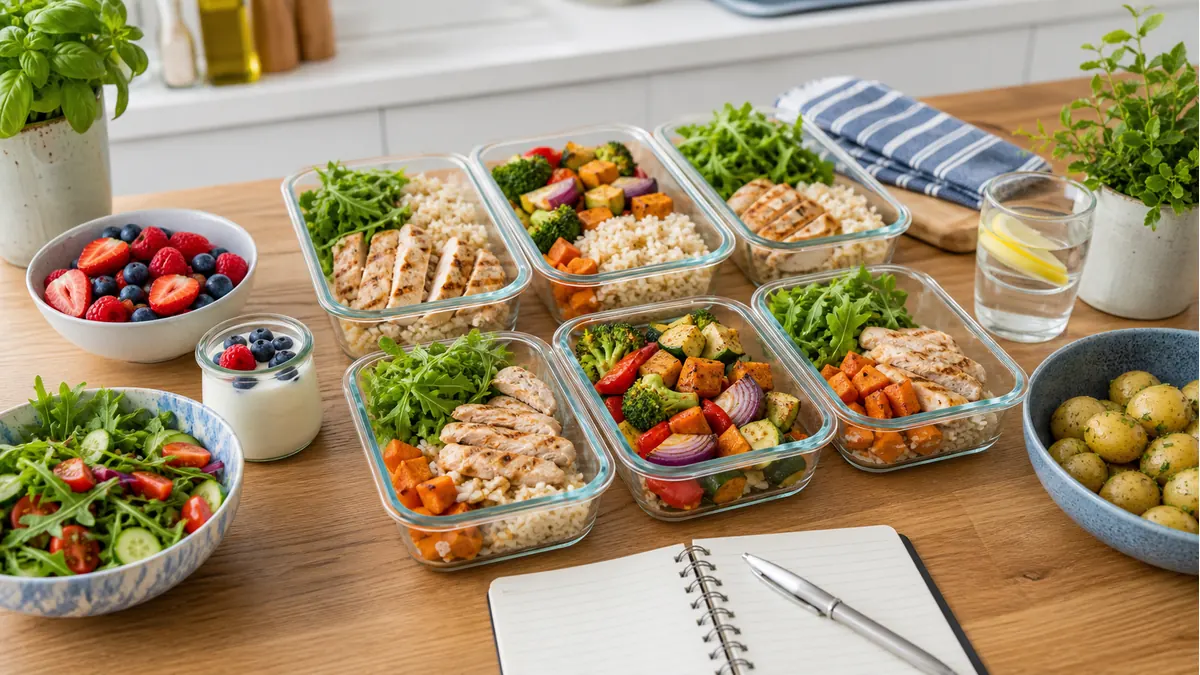
1500 calories should not look like black coffee, lettuce and a tiny dinner. This guide is a visual explainer for the shape of a realistic UK 1500 calorie day; if you want the full weekly menu, use the linked 7-day meal plan.
As an Amazon Associate I earn from qualifying purchases. Product prices and availability can change on Amazon UK.
For the complete weekly menu, use the 1500 calorie meal plan UK, or compare filling foods in the low calorie foods UK guide.
Portioning these amounts is easier with the right box size — the meal prep container size guide covers when 500 ml, 1 litre or larger makes sense.
Seeing What 1500 Calories Looks Like Is Easier Than Guessing It
This whole page is about portion size by eye. A scale is how you calibrate that once, then stop needing it.
Salter Arc Digital Kitchen Scale
A slim, add-and-weigh digital scale with a 3kg capacity, useful for portioning rice, protein and vegetables precisely rather than guessing by eye.
Best forWeighing portions accurately for calorie or macro tracking
Good to knowNo liquid measurement mode; for sauces and liquids, a scale with an Aquatronic function is more useful.
See Amazon price →Salter Disc Digital Kitchen Scale
A 5kg-capacity scale with a liquid measurement mode, useful if your meal prep routine involves sauces, marinades or oils as well as solid portions.
Best forWeighing both solids and liquids for recipes and portioning
Good to knowThe glass platform needs to be dried fully before storing to avoid streaking.
See Amazon price →Quick Answer: a Realistic 1500 Calorie Day
A practical 1500 calorie day often splits into roughly 350-400 calories at breakfast, 400-450 at lunch, 500-550 at dinner and 150-250 for snacks. That is flexible, but it stops one tiny meal from making the evening impossible.
| Meal | Example | Approx calories | Why it works |
|---|---|---|---|
| Breakfast | Greek yogurt, berries, oats and a few seeds | 350-400 | Protein, fibre and sweetness without a huge portion |
| Lunch | Chicken salad wrap with fruit or soup | 400-450 | Portable and easier than a salad-only lunch |
| Dinner | Turkey chilli with rice and vegetables | 500-550 | Warm, batch-friendly and filling |
| Snack | Skyr, cottage cheese, boiled eggs or fruit | 150-250 | Closes the protein gap between meals |
Three UK Examples of 1500 Calories
These examples show the shape of a day, not a rule. Portions and brands change the numbers, so use labels if you need exact tracking.
| Style | Breakfast | Lunch | Dinner | Snack |
|---|---|---|---|---|
| High protein | Skyr, oats and berries | Tuna jacket potato with salad | Chicken curry with rice and veg | Cottage cheese and fruit |
| Vegetarian | Eggs on toast with spinach | Halloumi and roasted veg salad | Lentil chilli with rice | Greek yogurt or skyr |
| Low effort | Protein yogurt and banana | Chicken wrap and soup | Low calorie ready meal with extra veg | Boiled eggs or fruit |
When to Use the Full 1500 Calorie Meal Plan
Use this article when you want to understand what a 1500 calorie day looks like. Use the full 1500 calorie meal plan when you want a ready-made 7-day week with meals, portions, macros and a shopping list.
What 1500 Calories Should Not Look Like
It should not require skipping breakfast, eating no carbohydrates or saving nearly all calories for dinner. Those patterns can work for a day, but they are hard to repeat and often lead to evening snacking.
It also should not ask you to multiply ingredient amounts by awkward numbers. A useful plan should show the actual portions needed for that calorie target, with a shopping list that matches the meals.
How to Make 1500 Calories More Filling
Use lean protein at each meal, add vegetables freely, choose potatoes, oats, beans, lentils or wholemeal bread over tiny low-volume snacks, and measure calorie-dense extras such as oil, cheese, peanut butter and sauces.
If 1500 calories feels too hard, compare 1600 or 1800 calorie plans before assuming you lack discipline. A slightly higher plan that you can follow for weeks is usually better than a perfect day that breaks by Thursday.
Frequently Asked Questions
Is 1500 calories enough food?
It depends on body size, activity, health status and goals. For some adults it is a moderate deficit; for others it is too low. Use it as general information, not medical advice.
Can 1500 calories include snacks?
Yes. Most realistic 1500 calorie days include at least one snack. The key is choosing snacks that add protein, fruit, fibre or useful volume rather than spending calories without filling you up.
Can I print a 1500 calorie meal plan?
Yes. The full 1500 calorie meal plan includes a weekly menu, calories, macros and shopping list that can be printed or saved.
Want this as a full 7-day plan?
We'll email the matching plan, its shopping list and a printable copy.
We'll send: 1500 Calorie Meal Plan UK: 7-Day High-Protein Plan with Shopping List
Want a new plan every week? Join the MealPrep+ waitlist.
Find Your UK Supermarket Meal Plan
Answer seven quick questions to find a realistic weekly plan for your supermarket, calorie target, budget and dietary preferences.
Find My Meal Plan →