High Protein Breakfast UK — 12 Quick Ideas with 30g+ Protein
A high-protein breakfast can support fullness and help preserve muscle while losing weight. Some studies associate a higher-protein breakfast with better appetite control than lower-protein alternatives, although individual responses vary. The comparison below gives 12 practical ideas using everyday UK supermarket ingredients.
Why Protein at Breakfast Matters
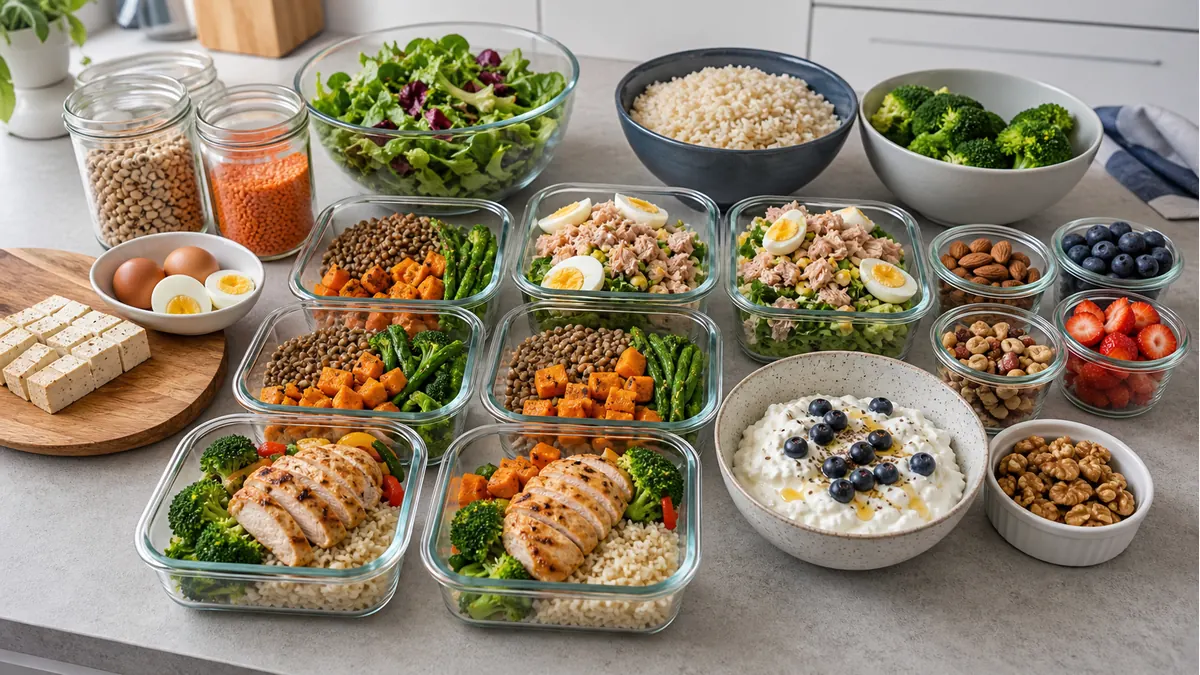
Protein is generally the most filling of the three macronutrients for the calories it costs, which is why a higher-protein breakfast tends to leave you reaching for less before lunch. That is the whole reason the plans on this site anchor every meal around a protein source rather than around carbohydrate.
For weight loss, muscle building, or simply staying energised and focused through a working morning, starting the day with 30–40 g of protein is one of the most evidence-backed dietary strategies available.
The 12 Best High-Protein UK Breakfasts
All options below are available using ingredients from Tesco, Aldi, Sainsbury's, or Asda. Calorie counts are approximate based on 2025 own-brand nutritional data.
Every breakfast in this table provides at least 30 g of protein and remains under 400 kcal.
| Breakfast | Protein | Calories | Prep Time |
|---|---|---|---|
| 3 whole eggs + 3 egg whites scrambled on 1 slice wholemeal toast | 34 g | 380 kcal | 5 min |
| 200 g 0% Greek yogurt + 30 g whey powder + mixed berries | 43 g | 320 kcal | 2 min |
| 3 eggs + 2 egg whites omelette with 40 g reduced-fat feta and spinach | 33 g | 350 kcal | 8 min |
| 250 g low-fat cottage cheese on 2 rice cakes + sliced cucumber | 31 g | 270 kcal | 3 min |
| 100 g smoked salmon + 2 poached eggs + 1 wholemeal toast | 38 g | 370 kcal | 8 min |
| Overnight oats: 60 g oats + 200 g 0% Greek yogurt + 20 g whey powder | 40 g | 390 kcal | 5 min (night before) |
| 4 egg whites + 1 whole egg scrambled with 50 g turkey rashers | 31 g | 250 kcal | 8 min |
| 250 g skyr + 30 g granola + 100 g strawberries | 31 g | 355 kcal | 3 min |
| Chicken breast wrap: 100 g cold cooked chicken + wholemeal wrap + spinach + mustard | 37 g | 380 kcal | 5 min |
| Protein pancakes: 1 banana + 2 eggs + 1 scoop protein powder | 35 g | 350 kcal | 12 min |
| 0% Greek yogurt bowl: 300 g yogurt + 100 g mixed berries + chia seeds | 31 g | 290 kcal | 3 min |
| 2 slices wholemeal toast + 200 g low-fat cottage cheese + sliced tomato | 30 g | 340 kcal | 3 min |
Best Protein Sources for UK Breakfasts
Not all protein sources suit breakfast equally. The best UK breakfast proteins are those that are quick to prepare, have a mild flavour that works with typical breakfast accompaniments, and are available in every supermarket.
- Eggs — the ultimate versatile breakfast protein. 6 g protein per egg, ~70 kcal. Scrambled, poached, omelette, or boiled.
- 0% Greek yogurt — 10 g protein per 100 g, ~57 kcal. Tesco, Aldi, Sainsbury's, and Asda all stock own-brand versions for £1–1.50 per 500 g.
- Skyr — Icelandic-style strained yogurt, 11 g protein per 100 g. Available at Lidl Milbona and most major supermarkets.
- Cottage cheese — 12 g protein per 100 g, 80 kcal. Works well on toast, in bowls, or blended into pancake batter.
- Smoked salmon — 20 g protein per 100 g, 125 kcal. Tesco and Sainsbury's sell own-brand trimmings for £2–3 per 100 g.
- Whey protein powder — 20–25 g protein per scoop, 100–130 kcal. Stir into yogurt, oats, or pancake batter for a concentrated protein boost.
Quick High-Protein Breakfasts for Busy Mornings
The most common barrier to a high-protein breakfast is time. These options take under three minutes and require no cooking — ideal for weekday mornings.
- Greek yogurt with protein powder stirred in and a handful of frozen berries — 40+ g protein in 90 seconds.
- Overnight oats prepared the night before — grab from the fridge and eat directly from the jar.
- Cottage cheese on rice cakes — no preparation beyond opening the container.
- Boiled eggs (hard-boiled on Sunday) with wholemeal toast from the toaster.
- Skyr with a drizzle of honey and mixed seeds — no prep beyond opening the pot.
High-Protein Breakfasts for Weight Loss
If your goal is weight loss, prioritise breakfast options in the 250–350 kcal range with 30+ g of protein. This leaves enough calorie budget for a satisfying lunch and dinner within a 1,500–1,800 calorie target while keeping hunger well-controlled throughout the morning.
The most effective options for weight loss: egg-based breakfasts (scrambled or omelette), cottage cheese on rice cakes, and Greek yogurt bowls. All three are low in calories relative to their protein content and have a high satiety-to-calorie ratio.
Use our free meal plan generator to build a full 7-day high-protein plan that includes a breakfast, lunch, dinner, and snack within your chosen calorie target.
High-Protein Breakfasts for Muscle Building
For muscle building, you can adapt the listed breakfasts with larger portions of oats, an extra egg, or a banana when your overall energy target calls for it.
If you train in the morning, a protein-containing breakfast after your session can support muscle protein synthesis. Overnight oats with added protein powder, a large egg-and-smoked-salmon breakfast, or a protein yogurt bowl are practical options.
Frequently Asked Questions
What is a good high protein breakfast under 400 calories?
Top options: 3 scrambled eggs on 1 slice wholemeal toast (about 23g protein, 325 kcal); 200g 0% Greek yogurt with 30g whey protein and berries (43g protein, 320 kcal); 100g smoked salmon with 2 poached eggs on toast (38g protein, 370 kcal). All are quick to prepare using everyday UK supermarket ingredients.
Is Greek yogurt a good high protein breakfast?
Yes. 0% Greek yogurt provides 10g protein per 100g at just 57 kcal — one of the best protein-to-calorie ratios of any food. A 200g pot provides 20g protein for under 115 kcal. Adding 30g of whey protein brings this to 43g protein for under 320 kcal total.
What can I eat for breakfast that is high in protein but quick?
The fastest high-protein breakfasts (under 3 minutes): Greek yogurt with protein powder stirred in (40g+ protein, 90 seconds); overnight oats prepared the night before (grab from fridge, eat cold); cottage cheese on rice cakes; hard-boiled eggs (pre-cooked on Sunday) with toast.
Want this as a full 7-day plan?
We'll email the matching plan, its shopping list and a printable copy.
We'll send: Aldi High Protein Meal Plan — 140-170g Protein, £35-45/week
Want a new plan every week? Join the MealPrep+ waitlist.
Find Your UK Supermarket Meal Plan
Answer seven quick questions to find a realistic weekly plan for your supermarket, calorie target, budget and dietary preferences.
Find My Meal Plan →