Weekly cost uses UK-wide average ingredient prices, not Generic UK supermarket checkout prices. A first shop of whole packs may cost more.
Daily average across the 7 days
1,997 kcal117g protein246g carbs60g fat40g fibre
Individual days vary around these figures.
About the cost estimate
Adjust Household PortionsCurrently 1 person · cooking 1 portion
Your 7-Day Meal Plan
Monday
2,002 kcal per person104g protein · 256g carbs per person
Breakfast339 kcal · 18g protein · 58g carbs · 5 min
Baked Beans on Wholemeal Toast
Made with reduced-sugar baked beans, wholemeal bread.
Recipe
Ingredients
200g reduced-sugar baked beans
2 slices of wholemeal bread
Allergens in this meal: Cereals containing gluten. Check the label for: Celery, Sesame, Soybeans. Worked out from generic ingredient names — always read the product label.
Method
Toast or warm the wholemeal bread.
Heat reduced-sugar baked beans through in a pan or the microwave.
Layer reduced-sugar baked beans evenly and season to taste.
Lunch511 kcal · 26g protein · 80g carbs · 12 min
Edamame and Soba Noodle Salad
Made with soba noodles, edamame beans, cucumber.
Recipe
Ingredients
80g soba noodles (dry weight)
100g edamame beans
½ cucumber
1 red pepper
1 tbsp soy sauce
1 tsp sesame oil
1 tsp ginger
Allergens in this meal: Cereals containing gluten, Sesame, Soybeans. Worked out from generic ingredient names — always read the product label.
Method
Cook the noodles according to their packet instructions, then drain and cool slightly.
Slice or chop cucumber and red pepper. Cook edamame beans in boiling water for 3-4 minutes, then drain.
Arrange soba noodles, edamame beans, cucumber and red pepper in a bowl and finish with soy sauce, sesame oil and ginger.
Dinner711 kcal · 33g protein · 69g carbs · 20 min
Spinach and Ricotta Wholemeal Pasta
Made with ricotta, wholemeal pasta, baby spinach.
Recipe
Ingredients
100g ricotta
90g wholemeal pasta (dry weight)
5 generous handfuls baby spinach (about 150g)
2 garlic cloves
15g parmesan
1 tbsp olive oil
Allergens in this meal: Cereals containing gluten, Milk. Check the label for: Eggs. Worked out from generic ingredient names — always read the product label.
Method
Cook the pasta according to its packet instructions, keeping a mug of the cooking water before you drain it.
Meanwhile, gently cook the crushed garlic in the olive oil in a large pan for 1 minute, then add the baby spinach and stir until wilted.
Stir in the ricotta with a splash of the pasta water to make a sauce, then toss through the drained pasta.
Serve with the parmesan grated over.
Snack219 kcal · 5g protein · 19g carbs · 1 min
Almonds and Dried Cranberries
Made with almonds, dried cranberries.
Recipe
Ingredients
30g almonds
20g dried cranberries
Allergens in this meal: Tree nuts. Check the label for: Sulphur dioxide and sulphites. Worked out from generic ingredient names — always read the product label.
Method
Combine almonds and dried cranberries in a bowl or lidded container.
Snack222 kcal · 22g protein · 30g carbs · 5 min
Tuna on Rye Crackers
Made with tinned tuna in spring water, rye crackers, lemon juice.
Recipe
Ingredients
¾ of a standard tin of tuna, drained
4 rye crackers
1 tsp lemon juice
Allergens in this meal: Cereals containing gluten, Fish. Worked out from generic ingredient names — always read the product label.
Method
Drain tuna.
Top rye crackers with tuna and lemon juice and serve.
Estimated cost: £50–75/week for 1 person: the amounts the recipes use, at UK-wide average prices. A first shop of whole packs costs more. Calories and macros remain per person, while shopping quantities are scaled for the household.
0 of 81 items tickedSaved on this device
Protein
Carbs & Grains
Vegetables
Plant-Based Milks & Alternatives
Dairy & alternatives
Fruit
Herbs & Spices
Condiments & Oils
Tins & Jars
Nuts, seeds & other
Muscle building, at a higher daily calorie target. This 7-day plan targets 2,000 kcal/day and averages 117g of protein, built from ingredients stocked at any major UK supermarket for an estimated £50–75/week. The meal selection favours a higher protein-to-calorie balance. The first day's lunch and dinner are Edamame and Soba Noodle Salad and Spinach and Ricotta Wholemeal Pasta.
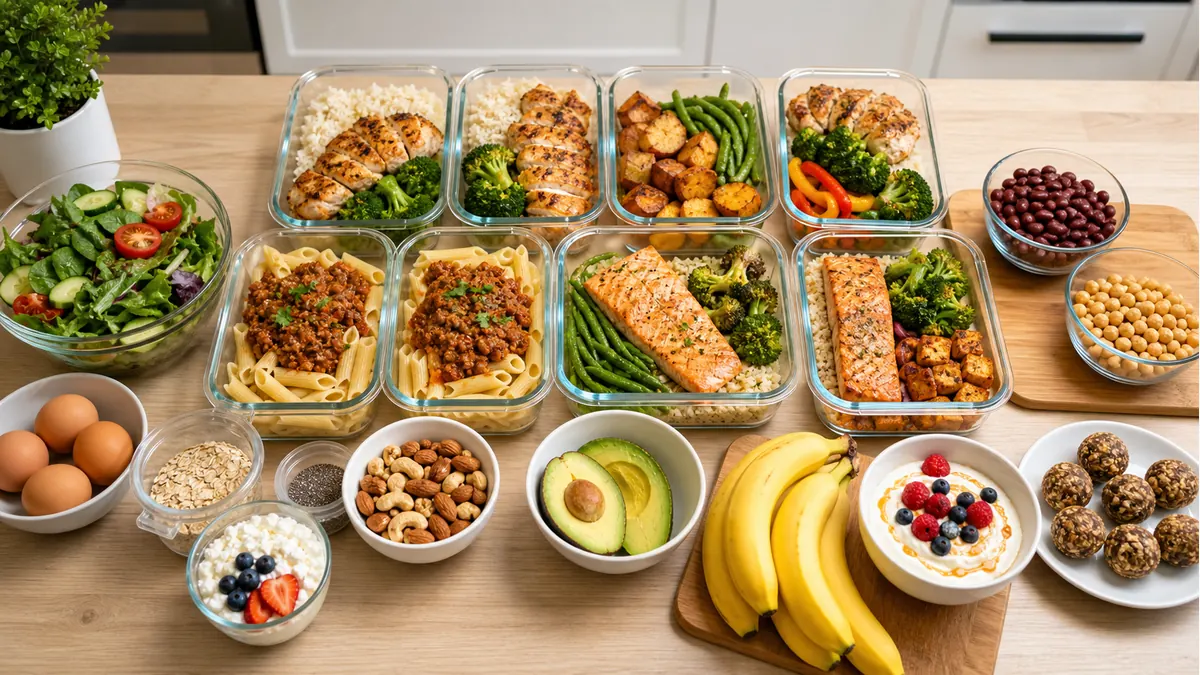
This plan has about 14 prep-friendly meals. Start with 8 main containers, 3 small sauce or snack tubs, and 2 freezer tubs.
Use 2 five-container glass packs to provide at least 8 main meal spaces, then add the separate small tubs shown above.
RecommendedMid-range glass setup
Best for regular weekday lunches, reheating at work, curry, chilli, pasta, and repeat washing.
Material
Glass
Price and availability
Check Amazon UK before buying
This plan includes saucy or reheated meals, so choose containers with secure, leak-resistant lids. If using plastic, check that it is suitable for reheating and follow the product instructions.
As an Amazon Associate I earn from qualifying purchases. Product prices and availability can change on Amazon UK.
The One Tool This Plan Assumes
The protein and calorie figures on this plan are calculated from weighed portions. Estimating by eye is where most high-protein plans quietly drift, so a set of digital scales is the difference between following this plan and approximating it. Any scale works — this is simply a cheap, accurate one.
As an Amazon Associate I earn from qualifying purchases. Product prices and availability can change on Amazon UK.
Kitchen scaleBudget
Salter Arc Digital Kitchen Scale
A slim, add-and-weigh digital scale with a 3kg capacity, useful for portioning rice, protein and vegetables precisely rather than guessing by eye.
Best forWeighing portions accurately for calorie or macro tracking
Good to knowNo liquid measurement mode; for sauces and liquids, a scale with an Aquatronic function is more useful.
Built from ingredients stocked by every major UK supermarket, using average UK pricing rather than one retailer.
Value rangeOwn-brand equivalents at any major retailer
What Generic UK supermarket is good for here
Ingredients are chosen from staples that most UK supermarkets carry, so the plan should work wherever you shop, though ranges still vary by store.
Easy to swap to a specific retailer later without changing the meals.
Costs reflect a mid-market average rather than the cheapest or priciest store.
Worth knowing before you shop
Shopping entirely at a discounter will usually come in below the estimate; a premium store above it.
No loyalty-scheme pricing is assumed.
Retailer details checked 2026-07-20. Ranges and loyalty schemes change — the weekly cost estimate above prices this plan's ingredients at UK-wide average prices, not live prices at this store.
Swaps & Suggestions
💰 Make it cheaper
Compare own-brand versions of the ingredients on this shopping list at your usual supermarket
Compare the price per 100g or 100ml when choosing pack sizes for this week’s quantities
Plan another use for any unused pack contents before buying extra ingredients
Compare dried pulses with the tinned pulses on this list if you have time to soak and cook them
Compare fresh and frozen berries for the berry meals in this plan
Compare fresh and frozen chicken breast prices for the chicken meals in this plan
💪 Increase protein
Add extra egg whites (3–4) to a breakfast instead of whole eggs — protein without the extra fat
Swap a carb portion for extra chicken breast or white fish on higher-hunger days
Use 0% fat Greek yogurt or quark instead of standard yogurt for the same volume, far more protein
🥦 Make it vegetarian
Replace chicken with Quorn fillets or diced firm tofu
Swap beef mince for tinned green lentils or plant-based mince
Use halloumi or feta instead of meat in lunch salads
Substitute eggs or cottage cheese for fish-based meals
Frequently Asked Questions
How much does this muscle gain plan cost per week?
This plan is designed for a generic UK supermarket and is estimated at £50–75 per week for one person: the ingredients its recipes use, priced at UK-wide average prices rather than as a live store quote. Buying whole packs of staples such as oil and spices makes a first shop cost more. Buying in bulk and choosing own-brand items can reduce this further.
How much protein does this plan provide per day?
This plan averages 117g of protein per day across the week, based on the meals actually selected. For comparison, the UK reference nutrient intake for adults is 0.75g of protein per kg of body weight a day (about 53g at 70kg); people who train regularly often aim higher.
How is this different from a generic muscle gain plan?
Plenty of muscle gain plans share the same 2,000 kcal target — the difference here is that the meal selection is biased toward lower-fat protein sources rather than just hitting a protein number however it can.
Can I print this muscle gain meal plan or save it as a PDF?
Yes. Use the export / print PDF button on the plan page. The printable version summarises all 7 days at 2,000 kcal/day, the generic UK supermarket shopping list, and your chosen household portion sizes.
Is this plan suitable for meal prep?
Most recipes in this plan scale well and reheat easily. Soups, stews, and grain dishes are ideal for making in larger batches to save time midweek.
Is this plan suitable for beginners?
Yes. The recipes need no specialist equipment or advanced technique and use ingredients available at a generic UK supermarket. Prep style: Standard (about 80 min a day), added up from the recipes' own times.
Recipes in this plan
Every meal in this week has its own page with the full ingredient list, method, cost and allergens.