High Protein Pasta Meal Prep UK
Pasta gets a reputation as a low-protein carb, but with the right approach it can anchor a genuinely high-protein meal prep week. This guide compares legume-based high-protein pasta with regular pasta, and covers the practical side of batch cooking pasta without it turning to mush by day three.
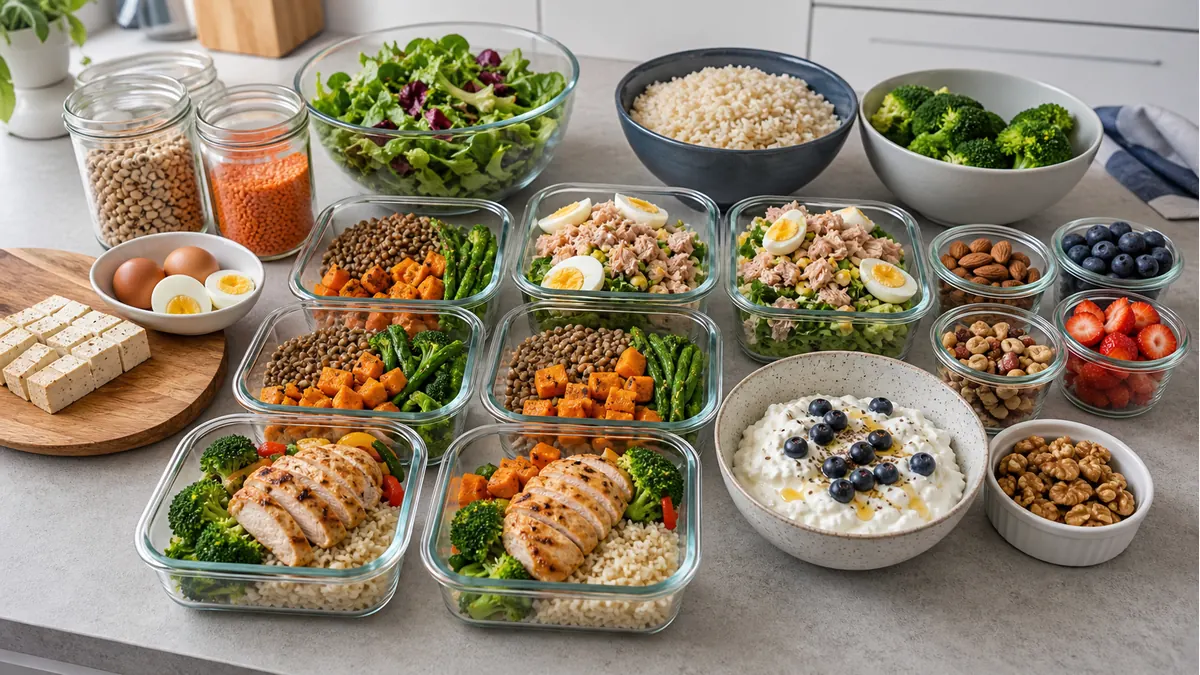
Batch-cooked pasta keeps best in a shallow box rather than a deep tub — the meal prep container size guide covers which shape suits which meal.
To turn this into a weekly plan, take the meal plan quiz or browse all UK meal plans.
Regular Pasta vs High-Protein Pasta
Standard wheat pasta typically provides around 12-13g of protein per 100g dry weight. Legume-based pasta made from chickpeas, red lentils or edamame beans typically provides 20-25g per 100g dry, roughly double, along with more fibre. The trade-off is texture: legume pasta is denser and slightly more prone to overcooking than wheat pasta, so timing matters more.
Best Ways to Boost Protein in a Normal Pasta Dish
If you prefer the taste and texture of regular pasta, boosting the sauce and toppings is just as effective as switching the pasta itself.
- Add chicken, prawns, tuna or lean mince to the sauce
- Stir through cottage cheese or ricotta for a creamy, high-protein sauce
- Top with extra grated cheese or a poached egg
- Mix in tinned beans or lentils alongside the pasta rather than replacing it
Batch Cooking Pasta Without It Going Mushy on Reheating
Cook pasta for about a minute or two less than the packet instructions, since it will soften further when reheated. Drain and toss immediately with a small amount of oil to stop pieces sticking together, then cool before combining with sauce and refrigerating or freezing.
Store sauce separately from pasta where possible rather than mixing everything together in advance, since this gives you more control over texture when reheating and stops the pasta absorbing all the sauce's moisture and going stodgy.
Sample High-Protein Pasta Meal Prep Combinations
These combine a pasta base with a clear protein source rather than relying on the pasta alone.
| Combination | Approx protein per portion | Notes |
|---|---|---|
| Legume pasta + chicken + tomato sauce | 45-55g | High protein from both pasta and chicken |
| Regular pasta + tuna + cherry tomatoes | 30-35g | Cheap, quick, good cold or reheated |
| Legume pasta + ricotta + spinach | 25-35g | Vegetarian, creamy sauce |
| Regular pasta + lentils + mince ragu | 35-40g | Budget-friendly protein boost from lentils |
Ordinary Pasta Already Has More Protein Than People Think
Dried pasta is roughly 12g of protein per 100g, which is not trivial - a 100g dry portion contributes about as much as two eggs before anything is added to it. That is worth knowing before paying a premium for a high-protein version.
It is incomplete protein, low in lysine, which is why pasta with beans, lentils, dairy or meat does more than pasta alone. But the useful comparison for a specialist product is not against zero, it is against the ordinary pasta plus whatever you were going to put on it - and by that measure the gap is usually smaller than the price difference.
Where the Protein in a Pasta Dish Actually Comes From
The sauce, in almost every case. A portion of pasta with lentil ragu, tuna, chicken or a ricotta-based sauce clears thirty grams comfortably, and none of that depends on the pasta being special. Adding a tin of lentils to a tomato sauce costs pennies and does more than switching pasta type.
That makes high-protein pasta a convenience purchase rather than a nutritional necessity. Worth it if it is the difference between cooking and not; not worth reorganising a shop around.
Frequently Asked Questions
Is legume-based pasta actually higher in protein?
Yes, typically 20-25g per 100g dry weight compared with around 12-13g for standard wheat pasta, roughly double.
How do I stop batch-cooked pasta going mushy?
Cook it slightly under packet timing, toss with a little oil after draining, and store sauce separately where possible rather than mixing everything together in advance.
Does high-protein pasta taste different?
Legume-based pasta has a denser, slightly nuttier texture than wheat pasta. Many people find it works well with strongly flavoured sauces, less so with very delicate ones.
Is high-protein pasta worth buying?
It is a convenience rather than a necessity. Ordinary dried pasta is already around 12g of protein per 100g, and the sauce is where most of a dish’s protein comes from - a tin of lentils in the sauce does more for less.
Want this as a full 7-day plan?
We'll email the matching plan, its shopping list and a printable copy.
We'll send: High-Protein Low Calorie Plan — 1,500 kcal
Want a new plan every week? Join the MealPrep+ waitlist.
Find Your UK Supermarket Meal Plan
Answer seven quick questions to find a realistic weekly plan for your supermarket, calorie target, budget and dietary preferences.
Find My Meal Plan →